



This year, Disney is celebrating one of the world’s most beloved characters, Winnie the Pooh, marking 100 years since the publication of A.A. Milne’s original book in October 1926. The beloved bear has now spent a century reminding us of the value of friendship, kindness, and the joys found in life’s simplest moments.
For many of us, there’s a good chance some of our first childhood encounters with Disney involved Pooh Bear and his pals from the Hundred Acre Wood. Today, he’s present across Disney Parks in the form of attractions, character greetings, and themed snacks; appears onscreen throughout various projects; and is found on products spanning numerous categories.
There are qualities of Winnie the Pooh that resonate with everyone – his deep devotion to his friends, unwavering sense of childlike wonder and whimsy, and insatiable hunger for adventure (and hunny).
As we celebrate his milestone anniversary, I was excited to learn more about the history of this universally loved character and how his legacy has been preserved – and reimagined – by teams at Disney Consumer Products and the Walt Disney Archives.
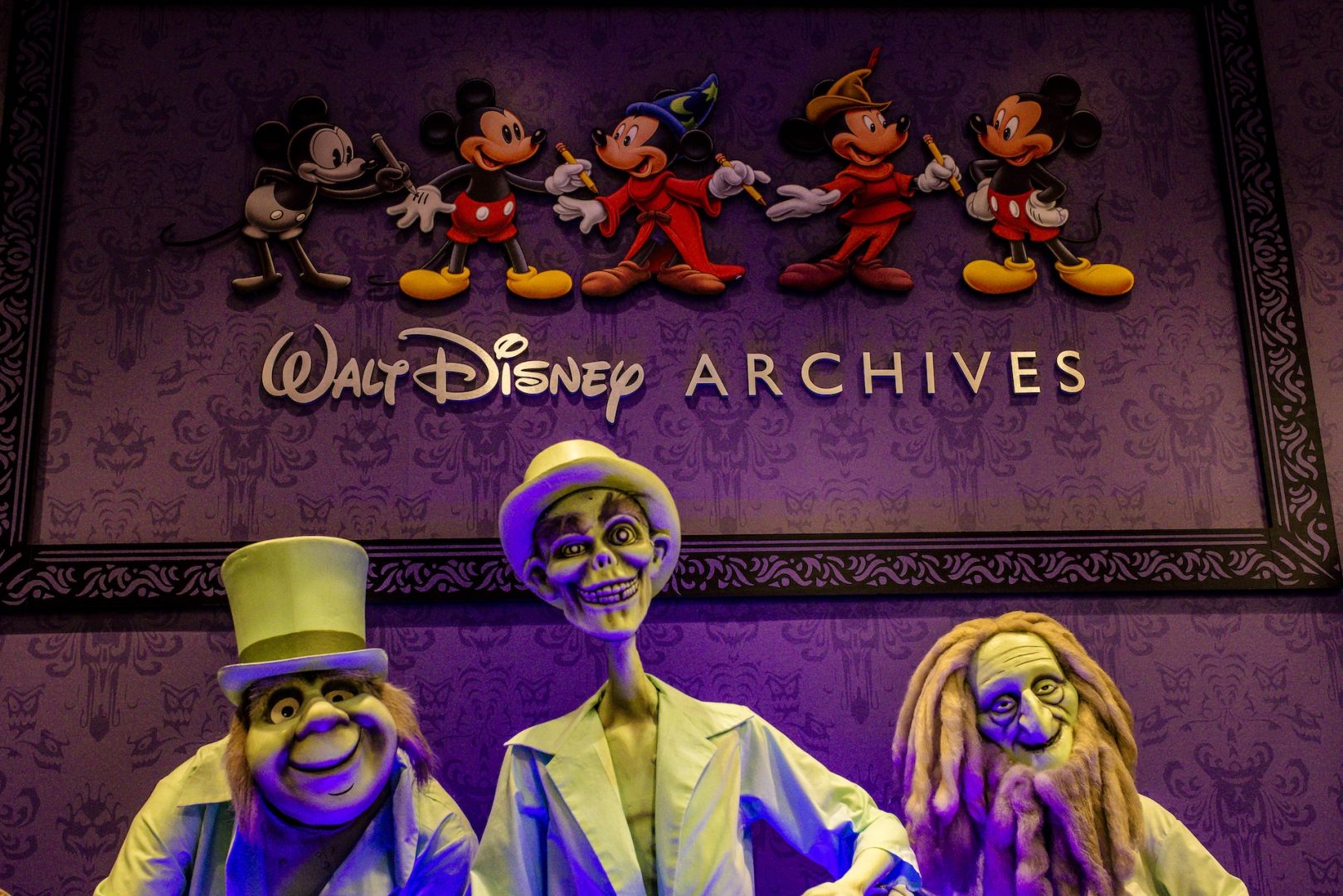
Understanding the Importance of the Walt Disney Archives
While I’ve been lucky enough to visit the Walt Disney Archives before, learning more about their function and responsibilities directly from Kevin M. Kern, who is Senior Manager of Research for the department, was an amazing experience.
Kevin shared that the Archives is considered to be one of the “historical brain trust” resources at Disney, being named specifically after Walt Disney – the dreamer and designer that started it all.
After being founded in 1970 by Disney Legend Dave Smith at the behest of Roy O. Disney, the Walt Disney Archives became critical to collecting and preserving the physical history and heritage of the company, from theme parks and consumer products to studio production.
The Archives team works in collaboration with internal partners today who provide samples of items to ensure their collection is representative of everything under the Disney umbrella.
But it wasn’t always this streamlined and simple – Kevin noted that when the Archives first began, the team relied not only on helpful internal employees and cast members, but also visits to local swap meets and vintage sales to source many early and foundational pieces of Disney merchandising history!
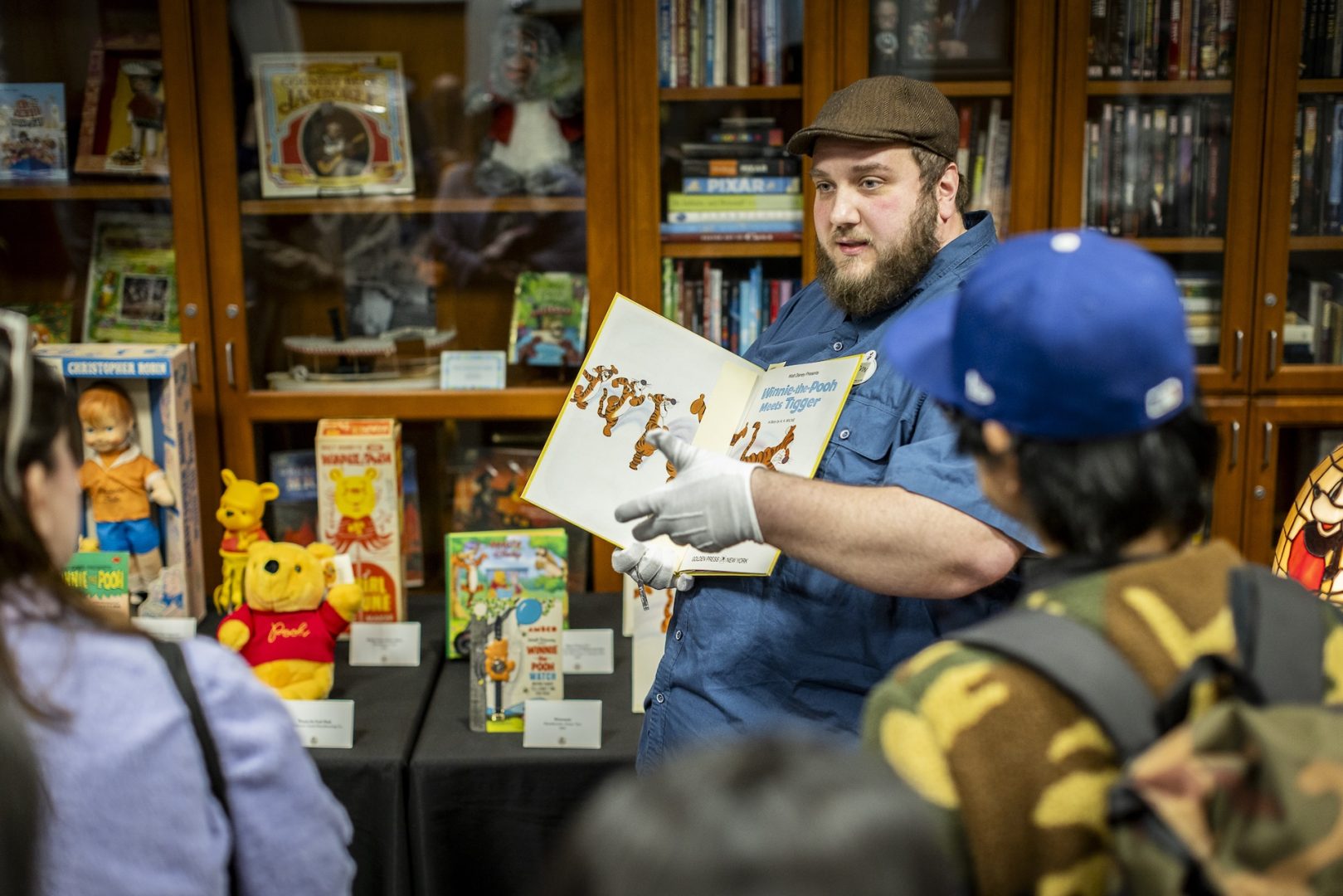
Kevin explained that much of the product they have in the Archives directly informs new materials and merchandise that brands are looking to create, even occasionally inspiring one-to-one recreations as vintage pieces.
And when not in storage or being reviewed, the Walt Disney Archives team loans items to partners for display in museums, traveling exhibits, and other institutions, making these storied artifacts accessible to fans around the globe. “We want the history to talk and inform people,” said Kevin. “And the only way you can do that is by getting it out for people to see it.”
When it comes to Winnie the Pooh, Kevin shared their focus is on compiling a curated sampling of pieces that really resonated with people and played a critical role in this character’s history, with storytelling at the center.
In general, the Archives has a merchandise collection — namely early books and paper ephemera — dating back to the late 1920s and 1930s, which later includes Pooh-related samples like apparel, plush toys, board games, and publications that are a high-level representation of things that help tell the timeless story of the character.
Exploring the History of Winnie the Pooh
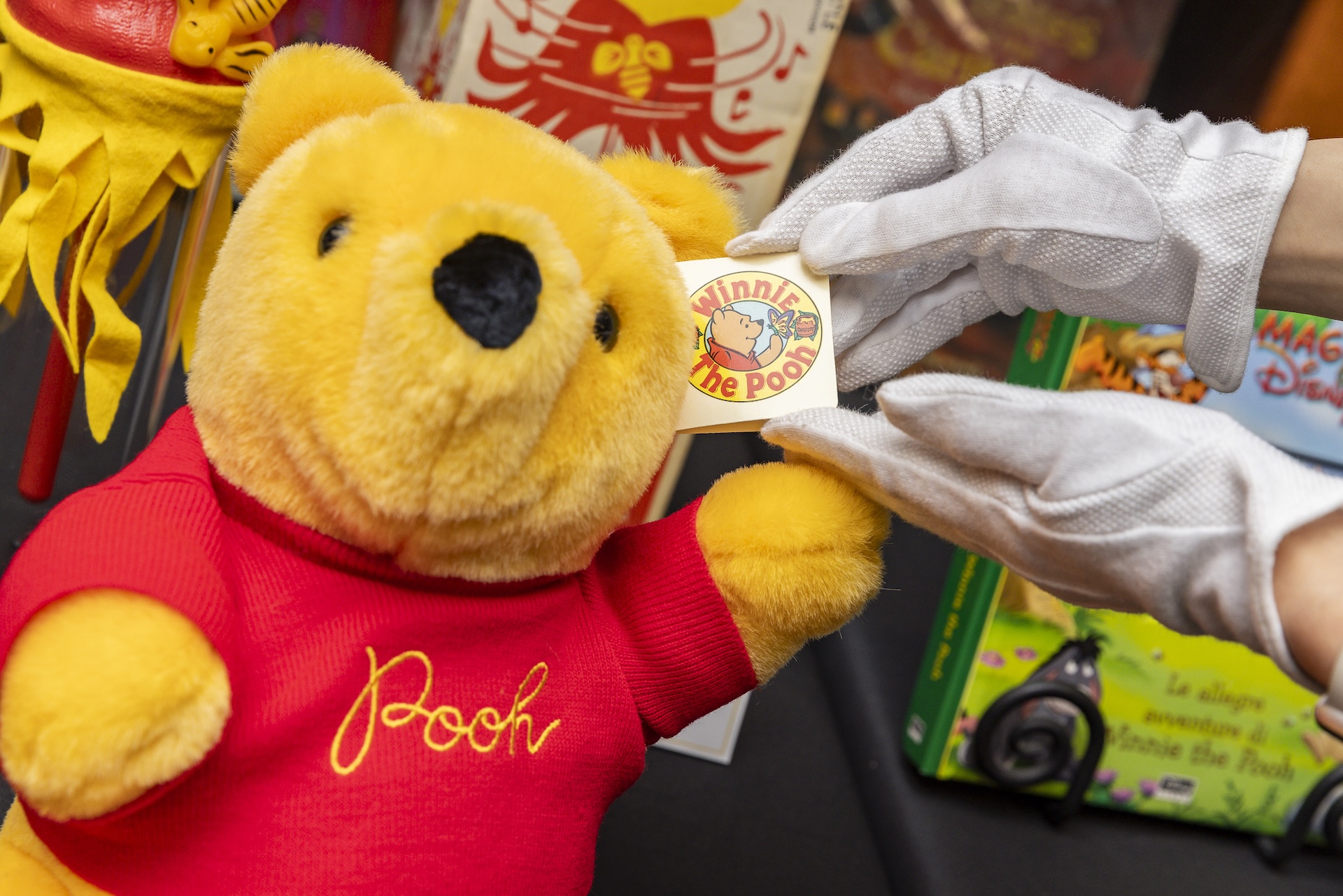
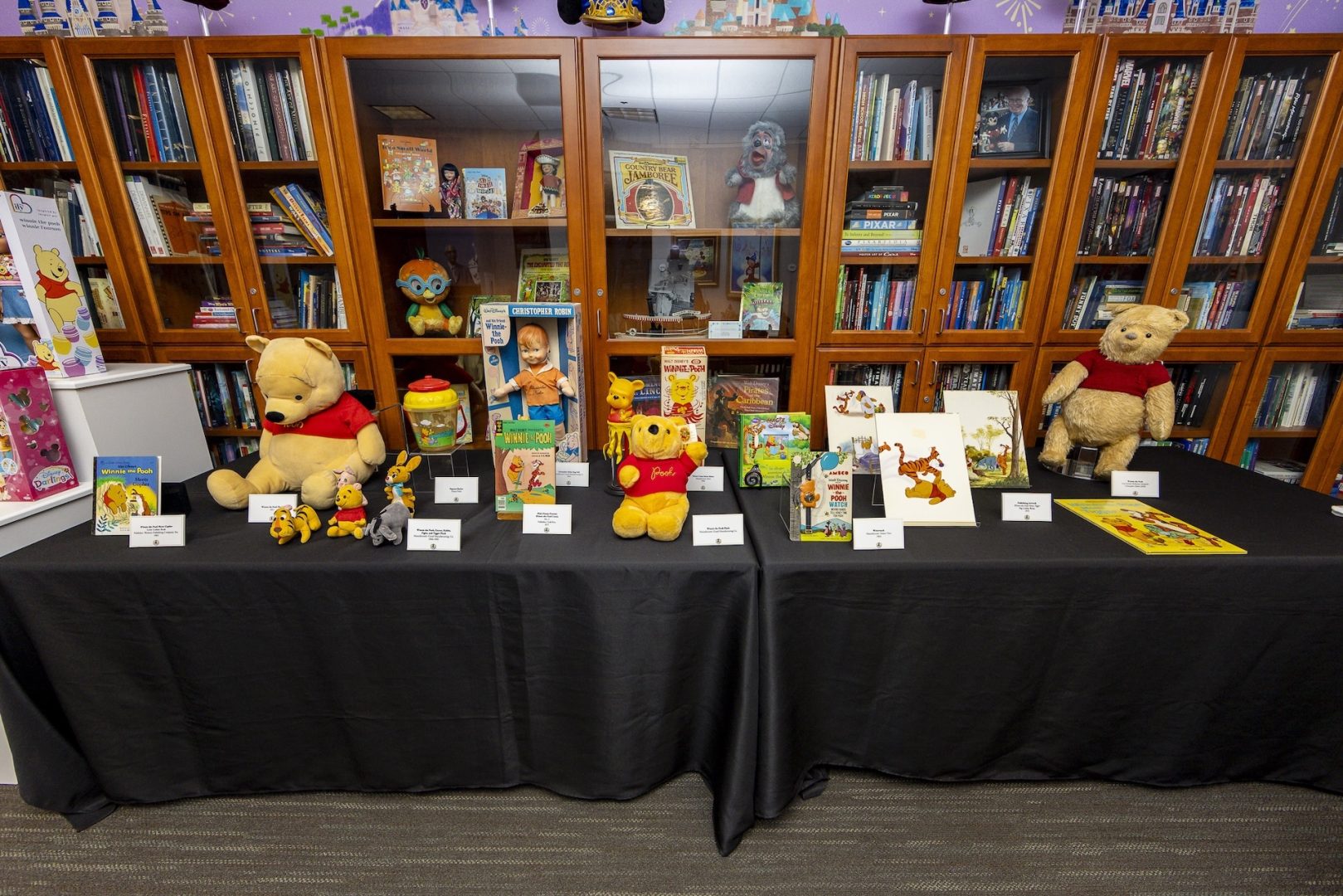
I was so excited to step inside the Walt Disney Archives, located on the iconic Walt Disney Studios lot in Burbank, where I had the opportunity to see a selection of Disney Winnie the Pooh products from the 1960s onward.
The display featured many items that may feel familiar to fans today, including various plush, books, toys, and even a sample of the ever-popular popcorn bucket from Disney Parks. But they all possessed a unique vintage charm, showcasing different styles that represent this character through the eras.
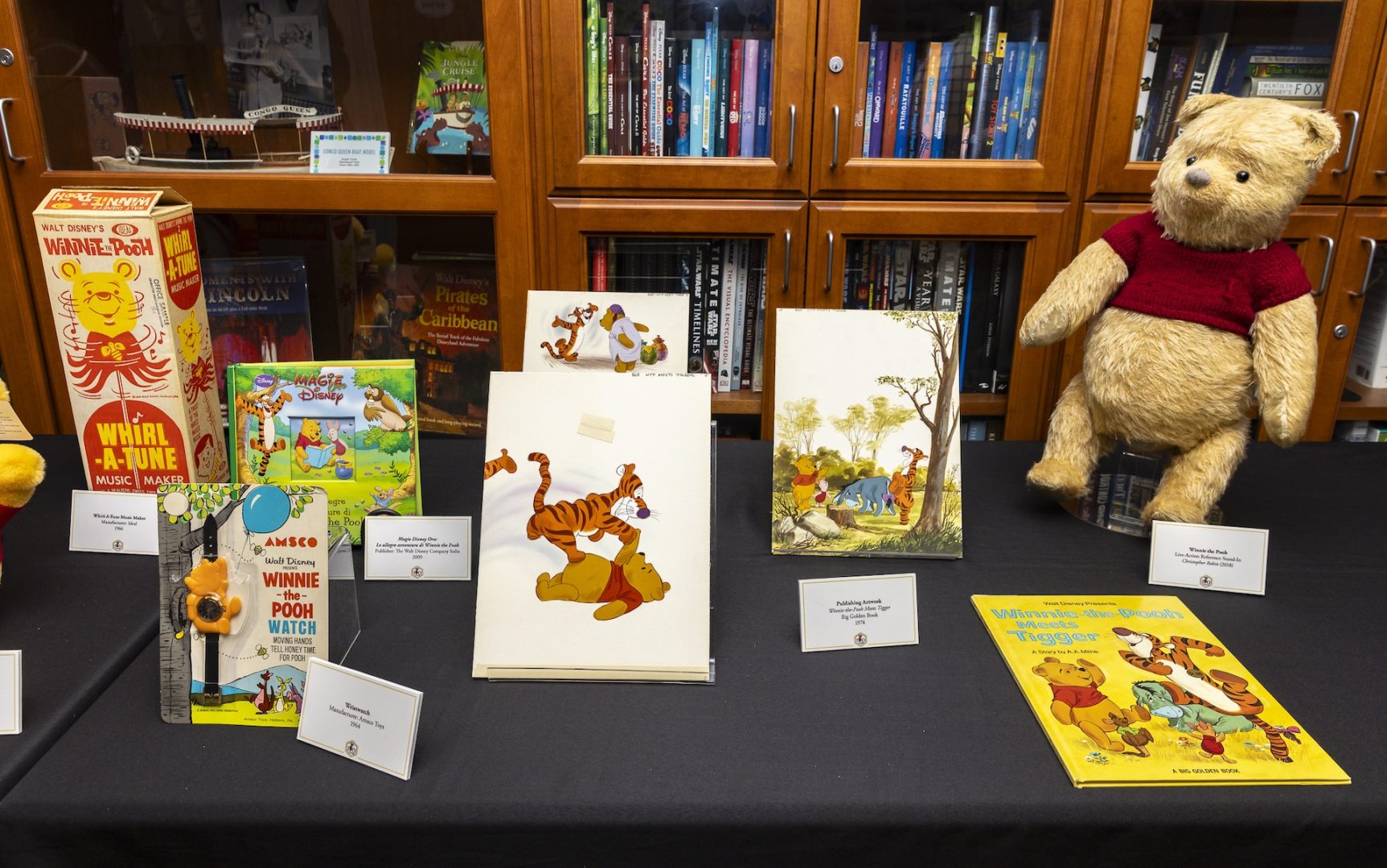
The star of the table seemed to be the Winnie the Pooh live-action reference stand-in from the 2018 Walt Disney Animation Studios film Christopher Robin, which the actors on set of the movie used as a reference point to interact realistically with the characters since they would later be replaced by CGI.
If I didn’t love this bear already, I think this item would have won me over – it so perfectly captures his kind and gentle personality.
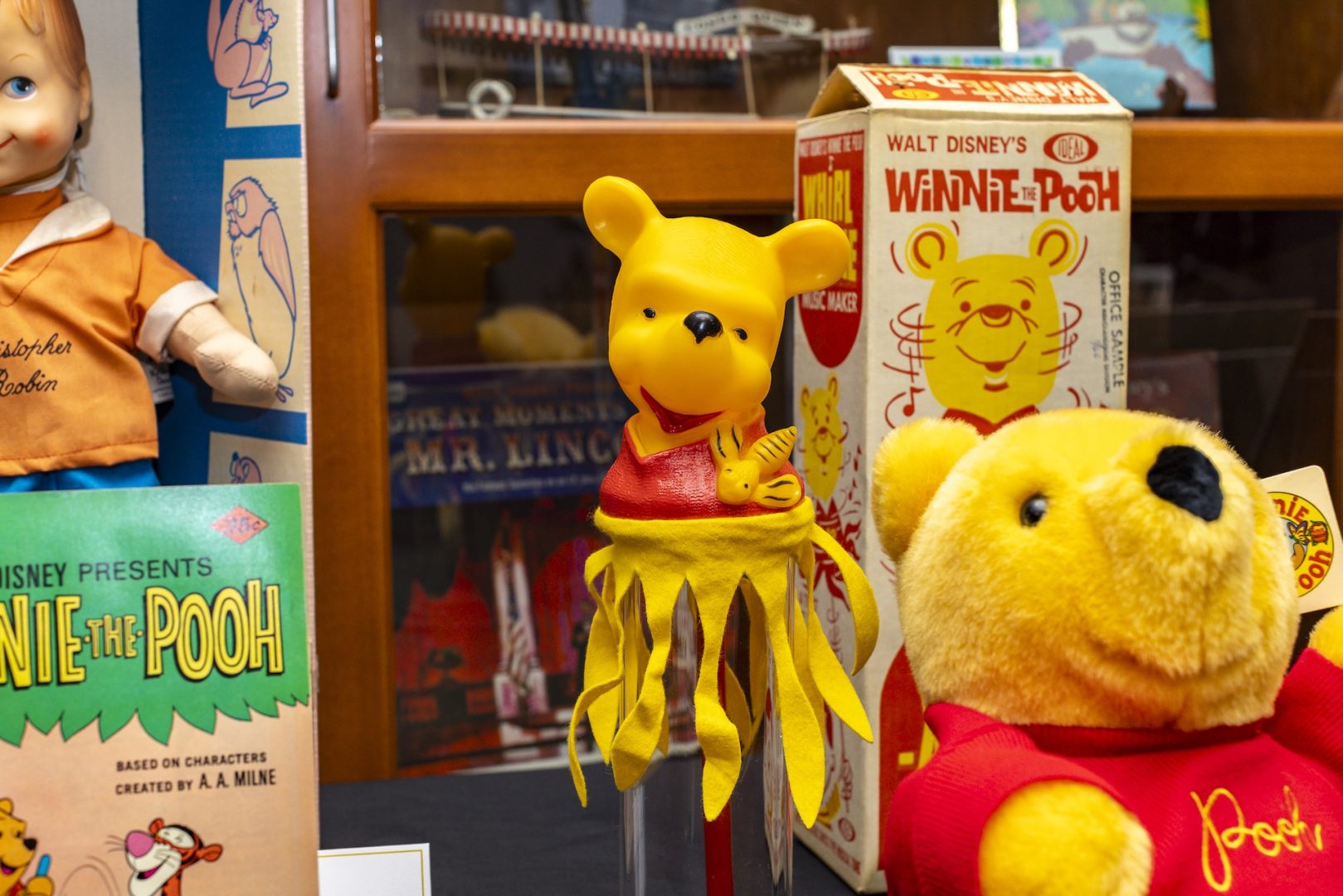


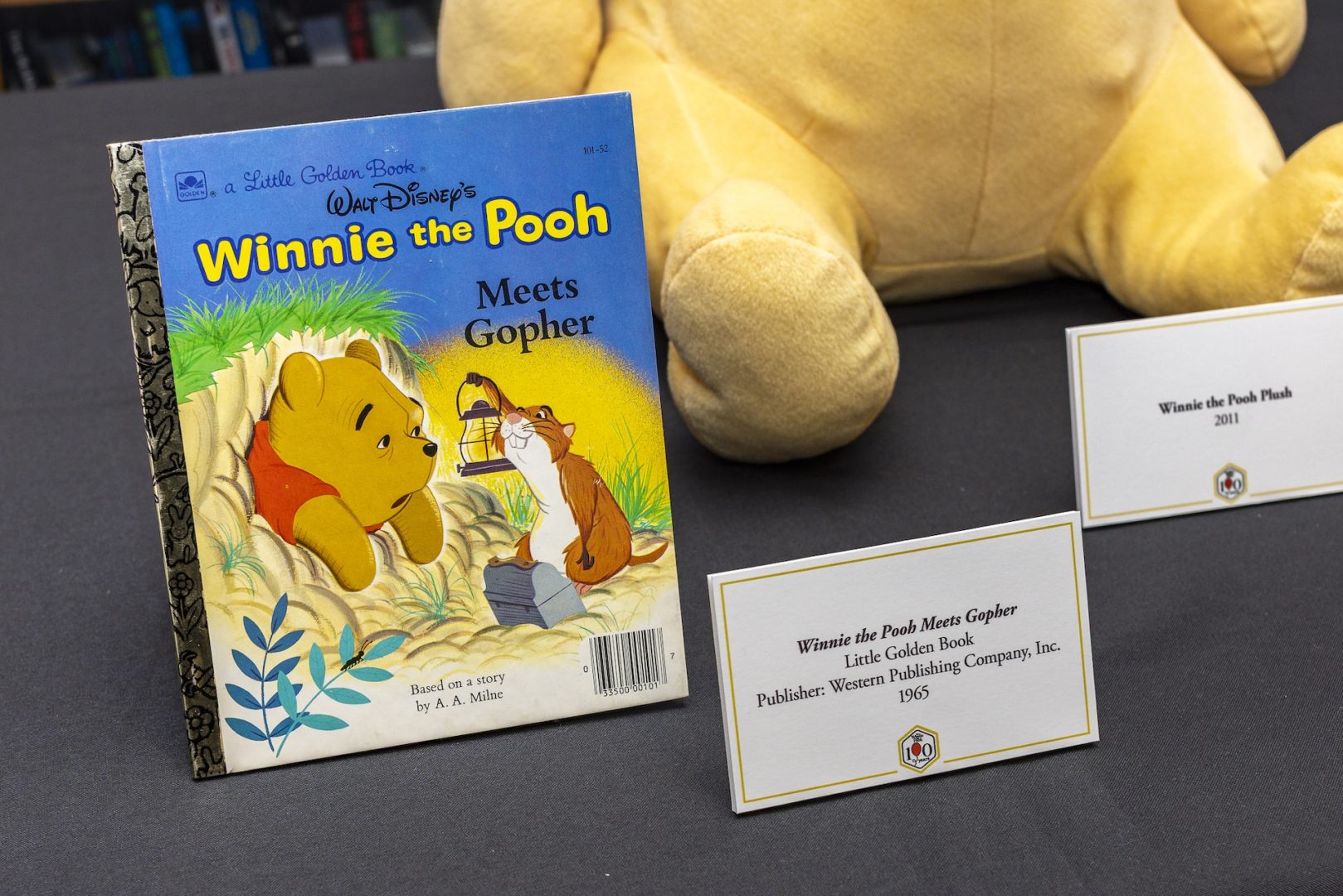
Some of the other products in the collection that Kevin called out specifically included a Winnie the Pooh Whirl-A-Tune Music Maker, an example of a Little Golden Book (one of the most endearing and enduring published storybook products) titled Winnie the Pooh Meets Gopher, and an international storybook from Italy.
When asked about his favorite piece of Winnie the Pooh history, Kevin told us that the international comic book collection is in his eyes one of the most broadly impressive areas of the Archives, knowing that it really helps them to see the reach and scope of characters like Pooh throughout the world.
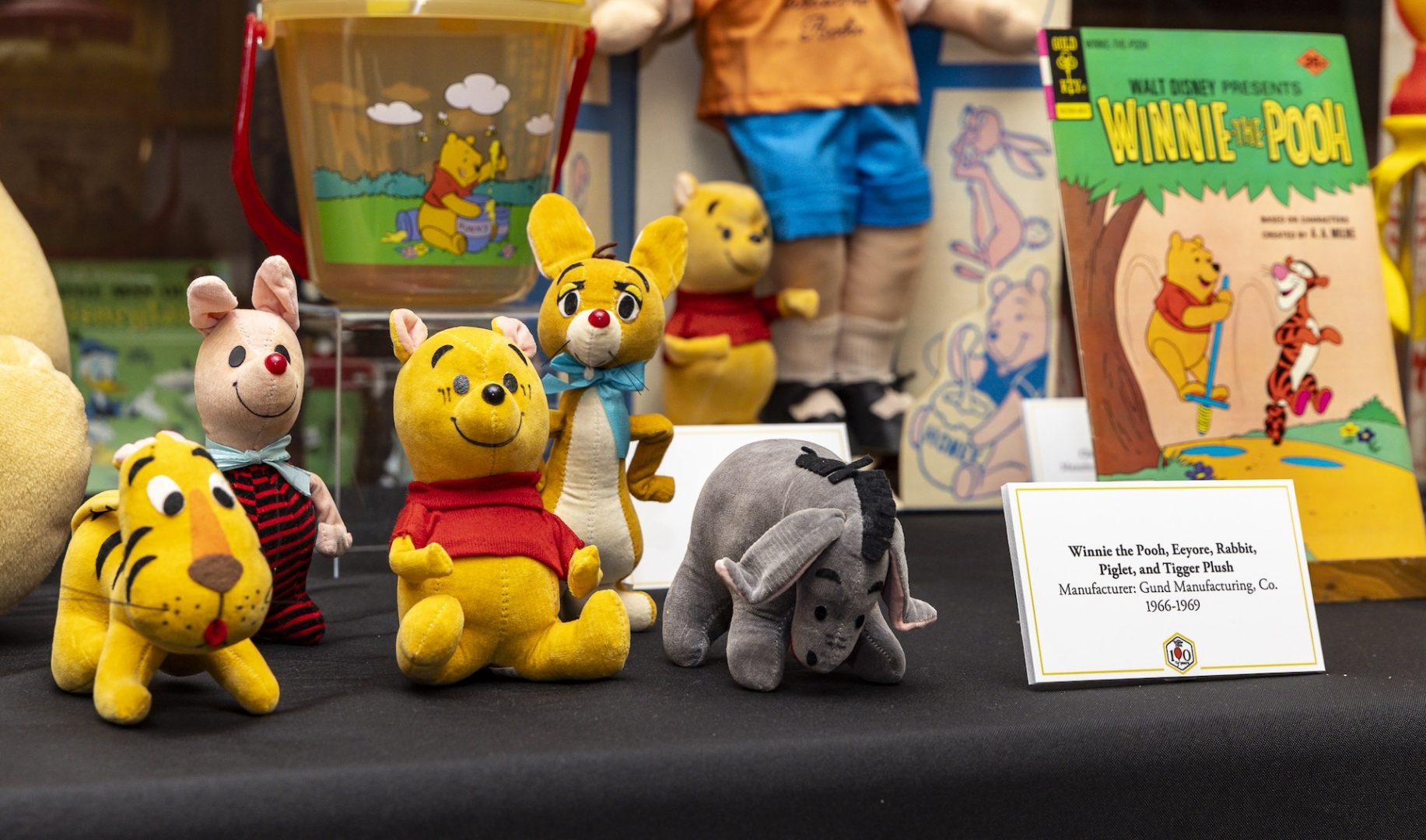
The items that were most memorable to me were the small plush from Gund Manufacturing Co, which we learned was one of Disney’s very first licensees working with the Winnie the Pooh franchise.
Gund still makes Pooh products today, and we got to peek at an adorable interactive toy meant for young children. Even just these items side by side is an incredible example of advancements in product design and technology over time, but I found it interesting that these miniature stuffed toys from the 1960s closely mirror the current trend of tiny plush today.
How is Winnie the Pooh Present in Products Today?
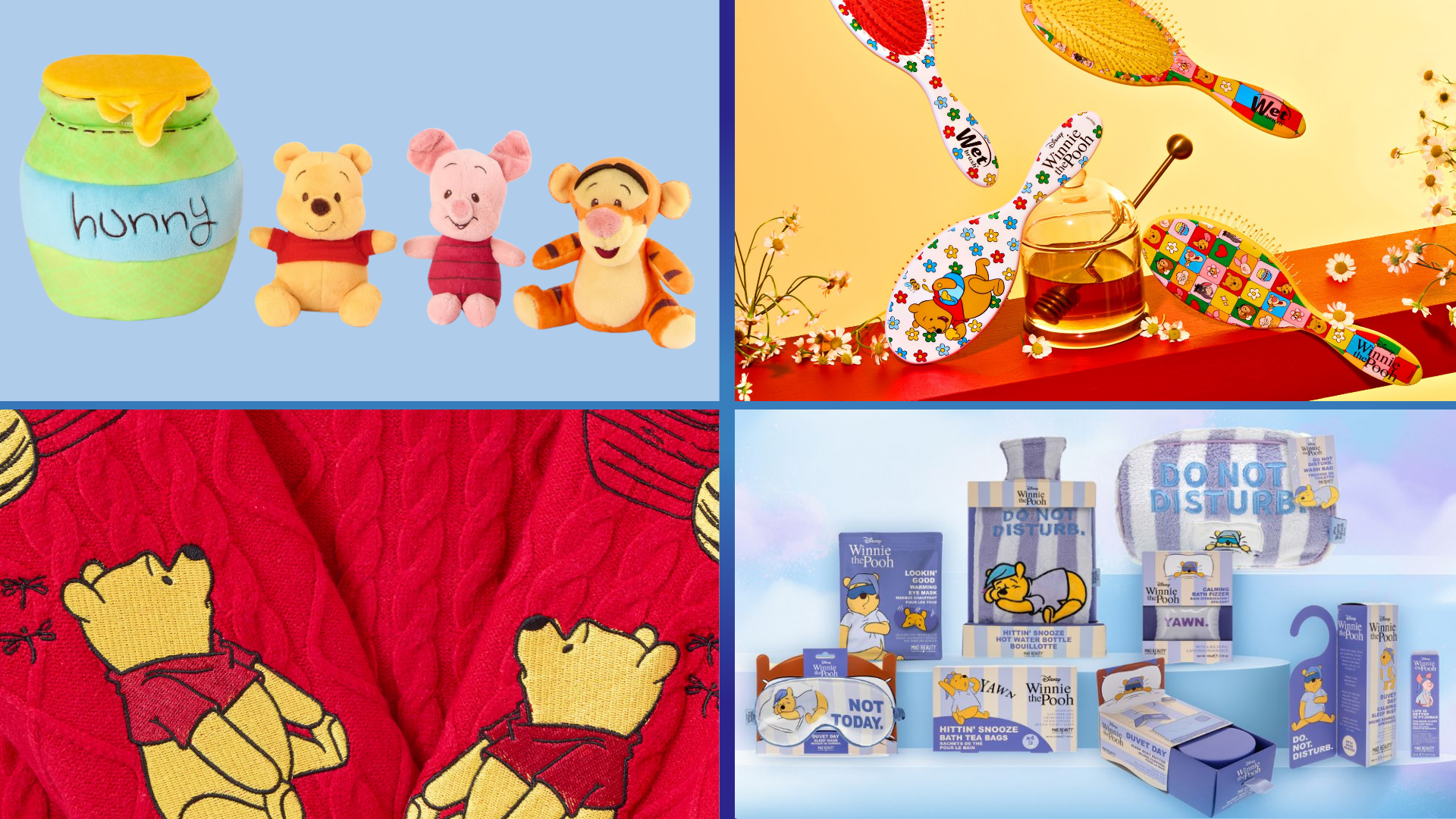
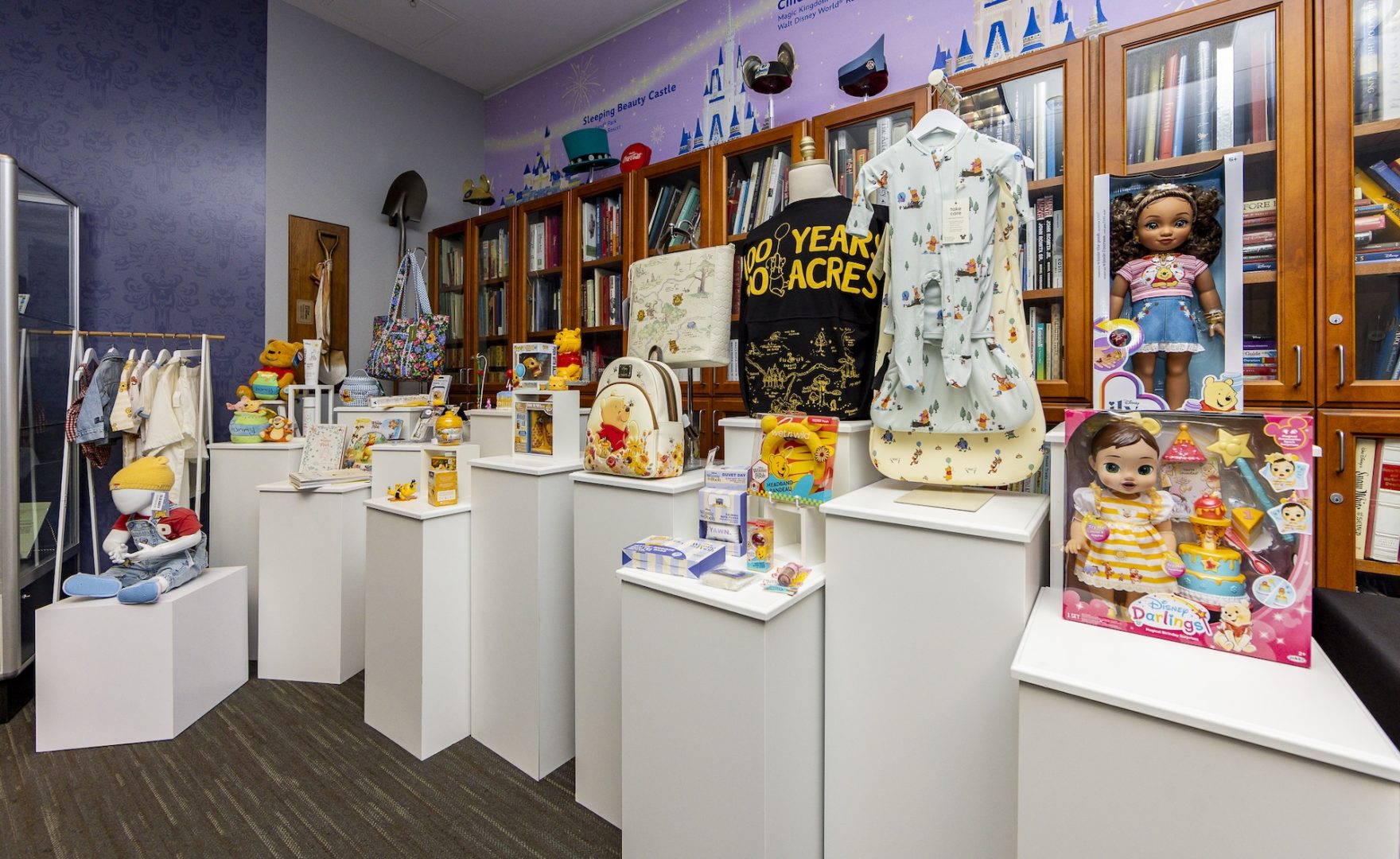
It was fascinating to see the clear evolution of Winnie the Pooh merchandise, with a display set up directly next to the historical items from the Archives collection, spotlighting new launches and pieces available now.
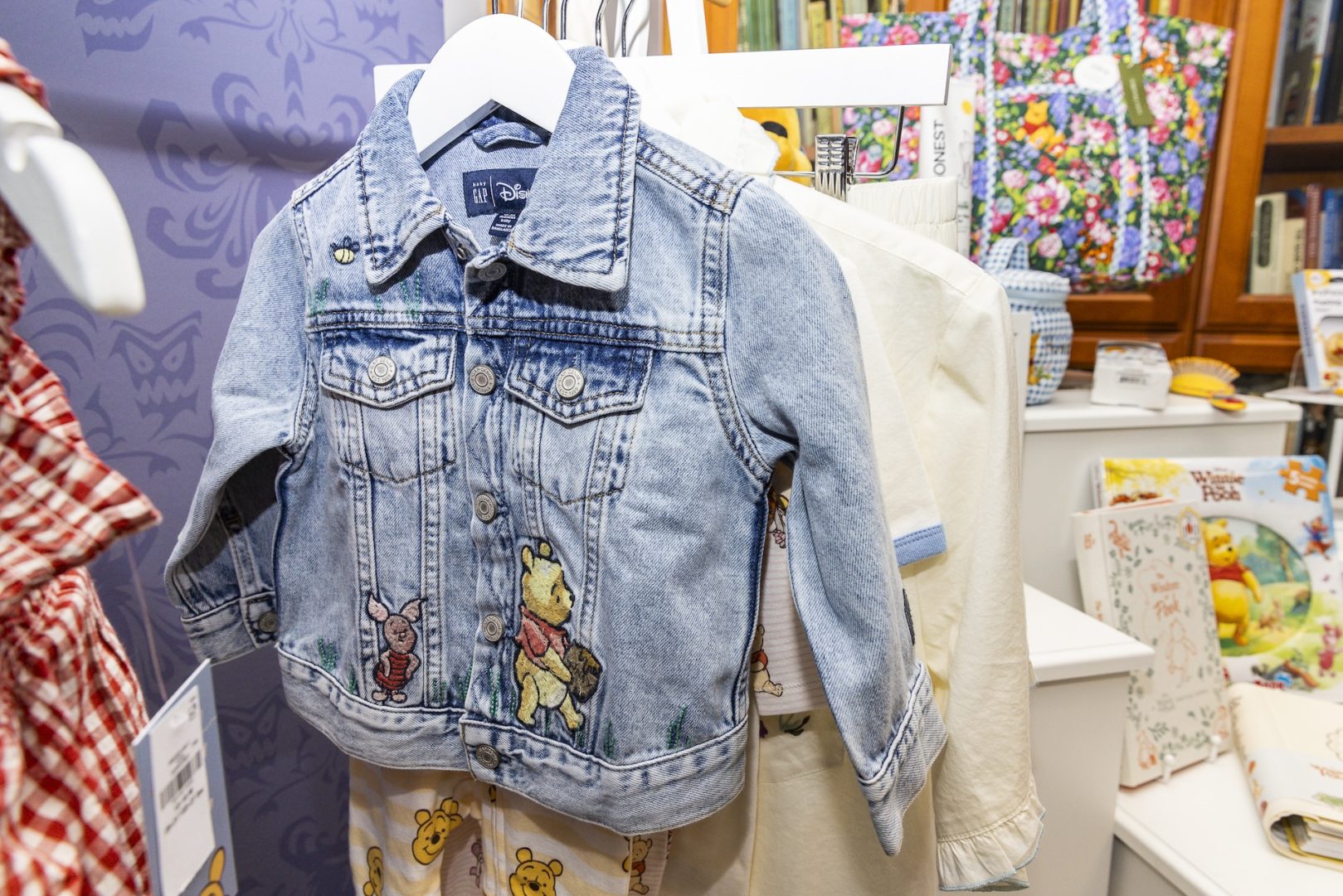
Fan-favorite brands such as Funko, Spirit Jersey, Loungefly, LEGO, Old Navy, and Vera Bradley were featured here, showing this classic character depicted across everything from beauty products to baby apparel.
These products all highlight the timeless nature of Winnie the Pooh, and how he has provided joy and comfort to generations of fans.
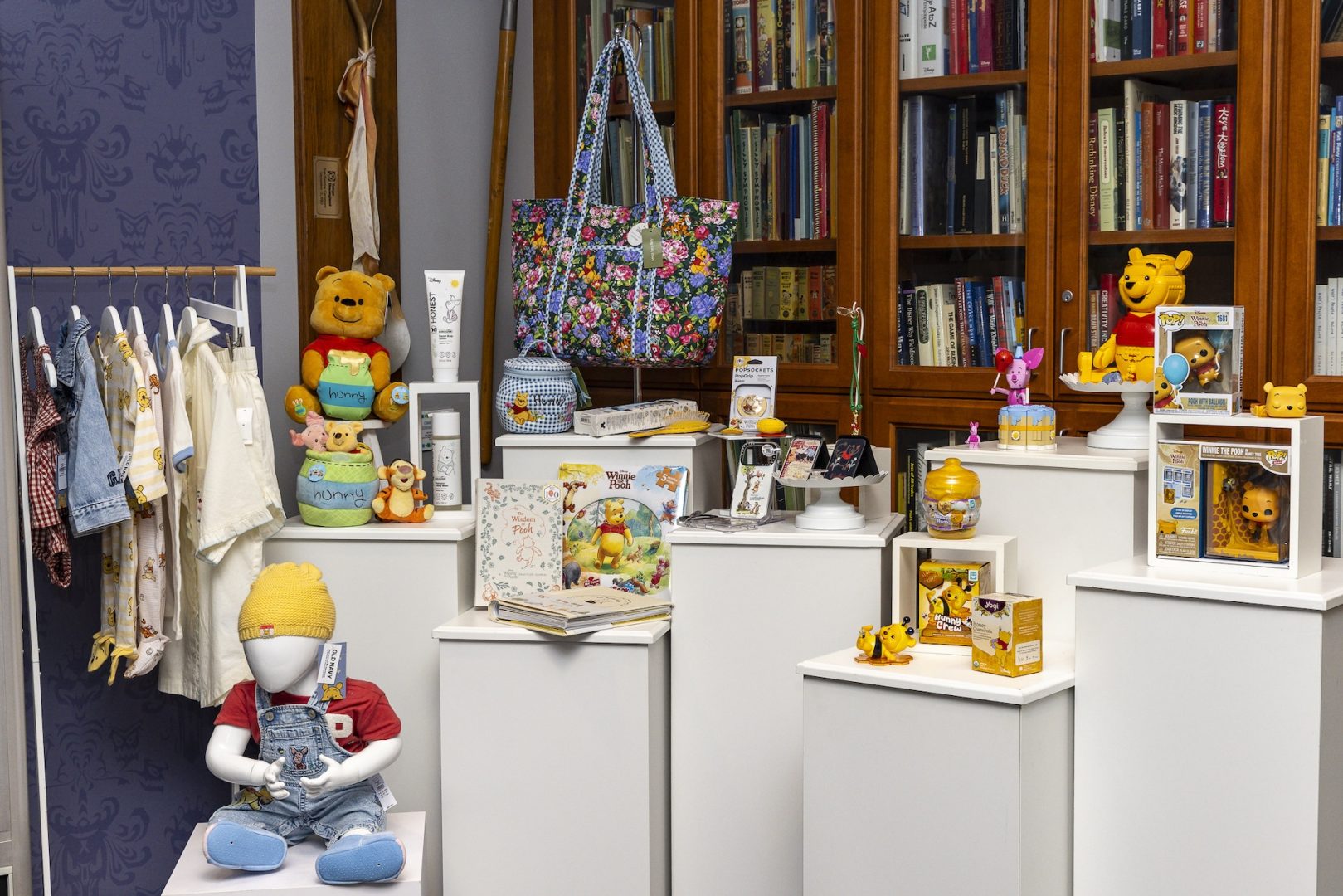
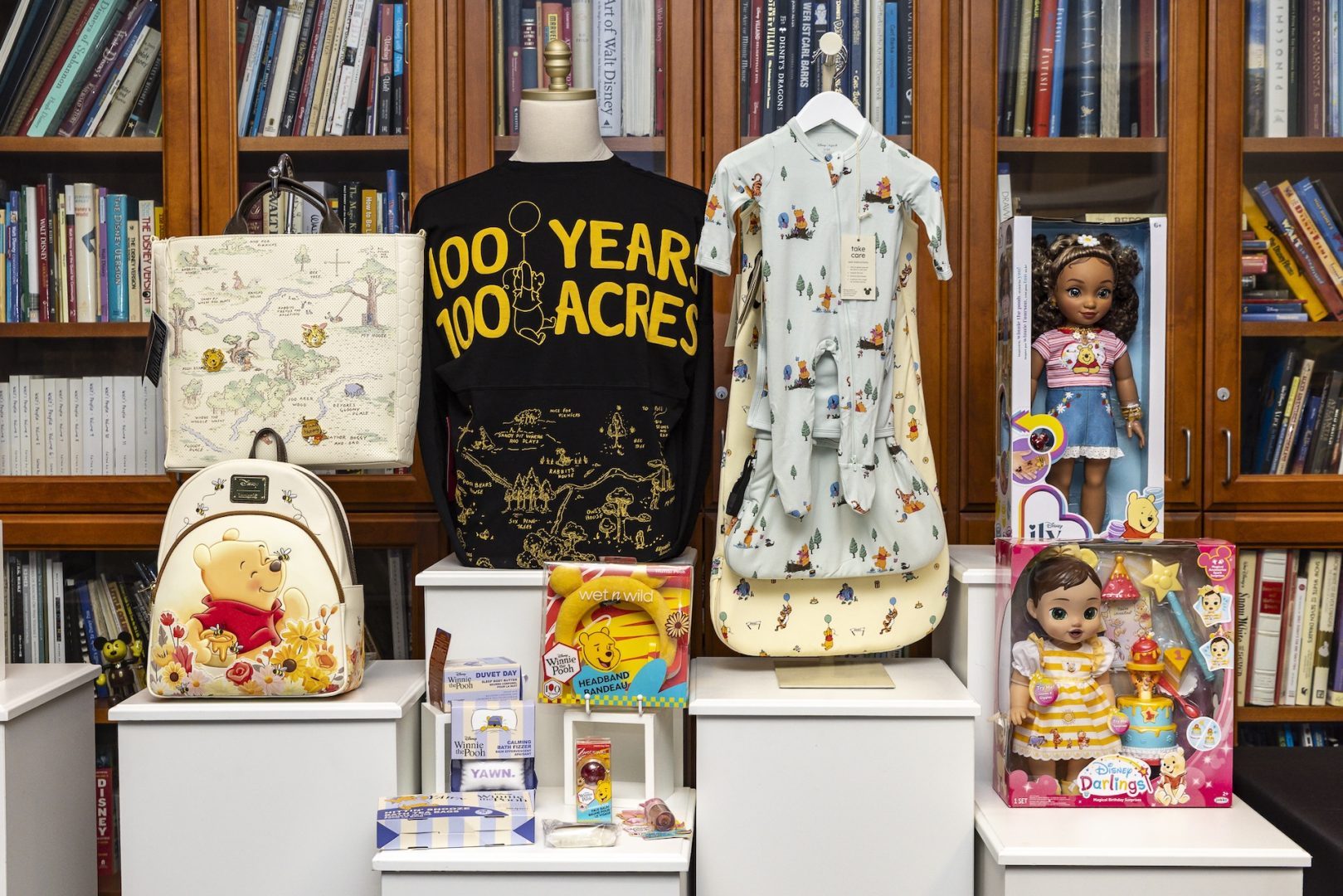
Later in the day, VP of Global Brand Commercialization for Disney Consumer Products Amanda Dhalluin provided valuable insights into how Disney Consumer Products (DCP) continues to evolve and expand the Winnie the Pooh franchise, while still preserving the character’s beloved essence that fans have come to expect.
Ultimately, the goal is to understand and satisfy consumer trends but in a way that stays centered to the storytelling of Pooh and who he is at his core.
The primary challenge and question Amanda shared is this: “How can we stretch Winnie the Pooh in an innovative way while keeping to his true essence and storytelling?”
The answer is through close collaboration with creative and product development teams as they look to tell his story through product in ways that appeal to today’s consumer, but still balances that classic, nostalgic Pooh.
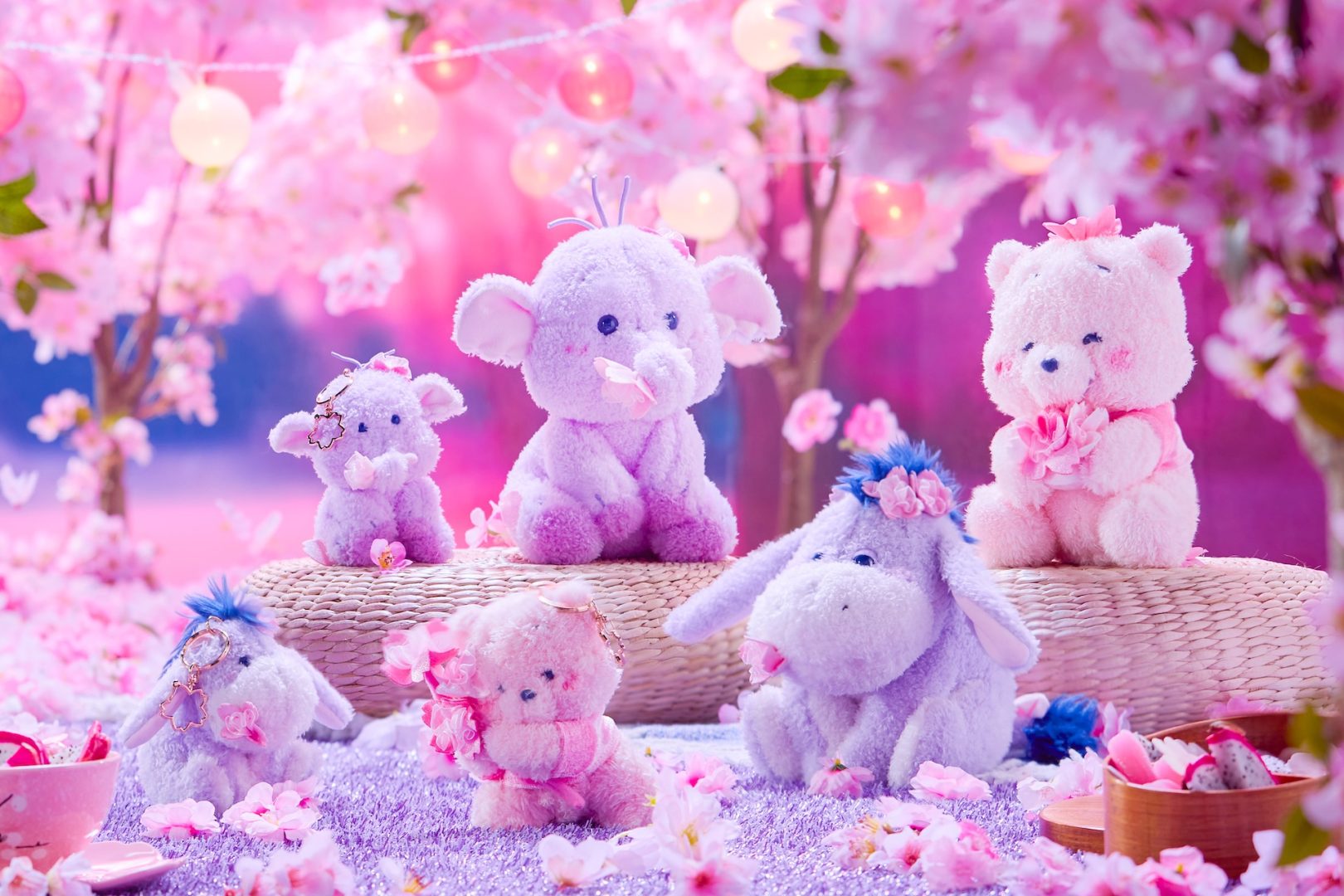
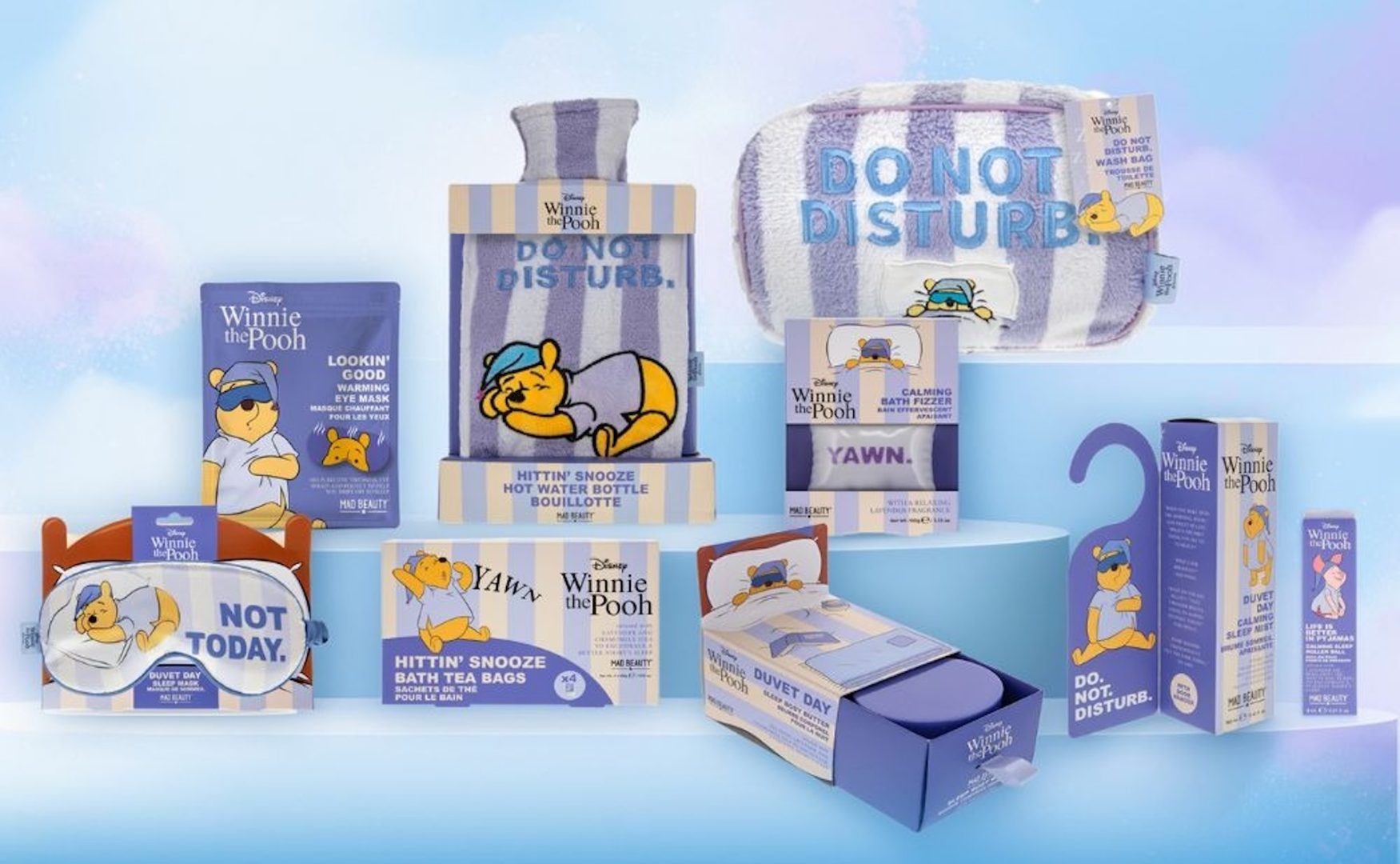
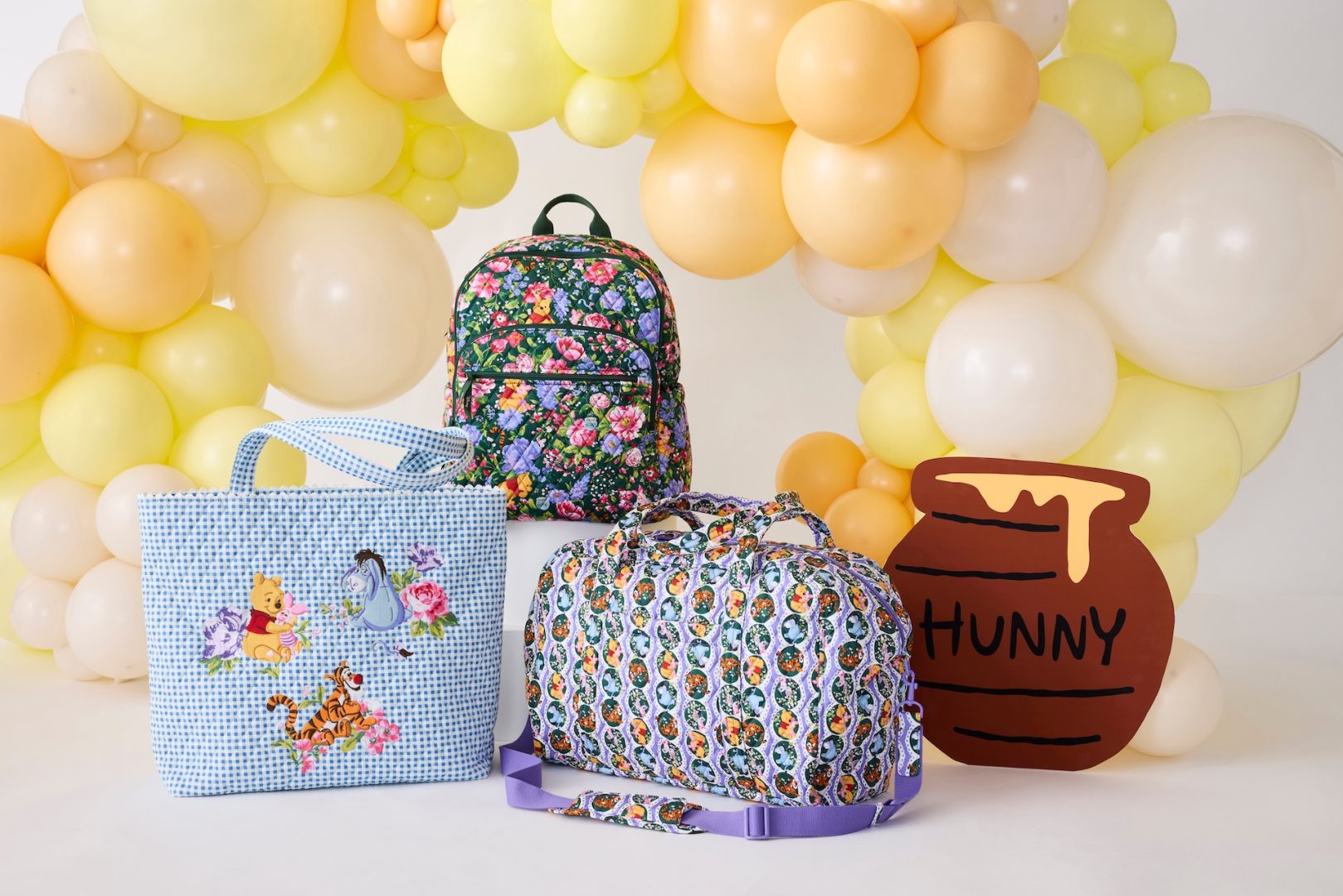
DCP has found that pushing the boundaries through fashion, whether it is through stylized character artwork or the product itself being used as a canvas, is a way to successfully strike this balance.
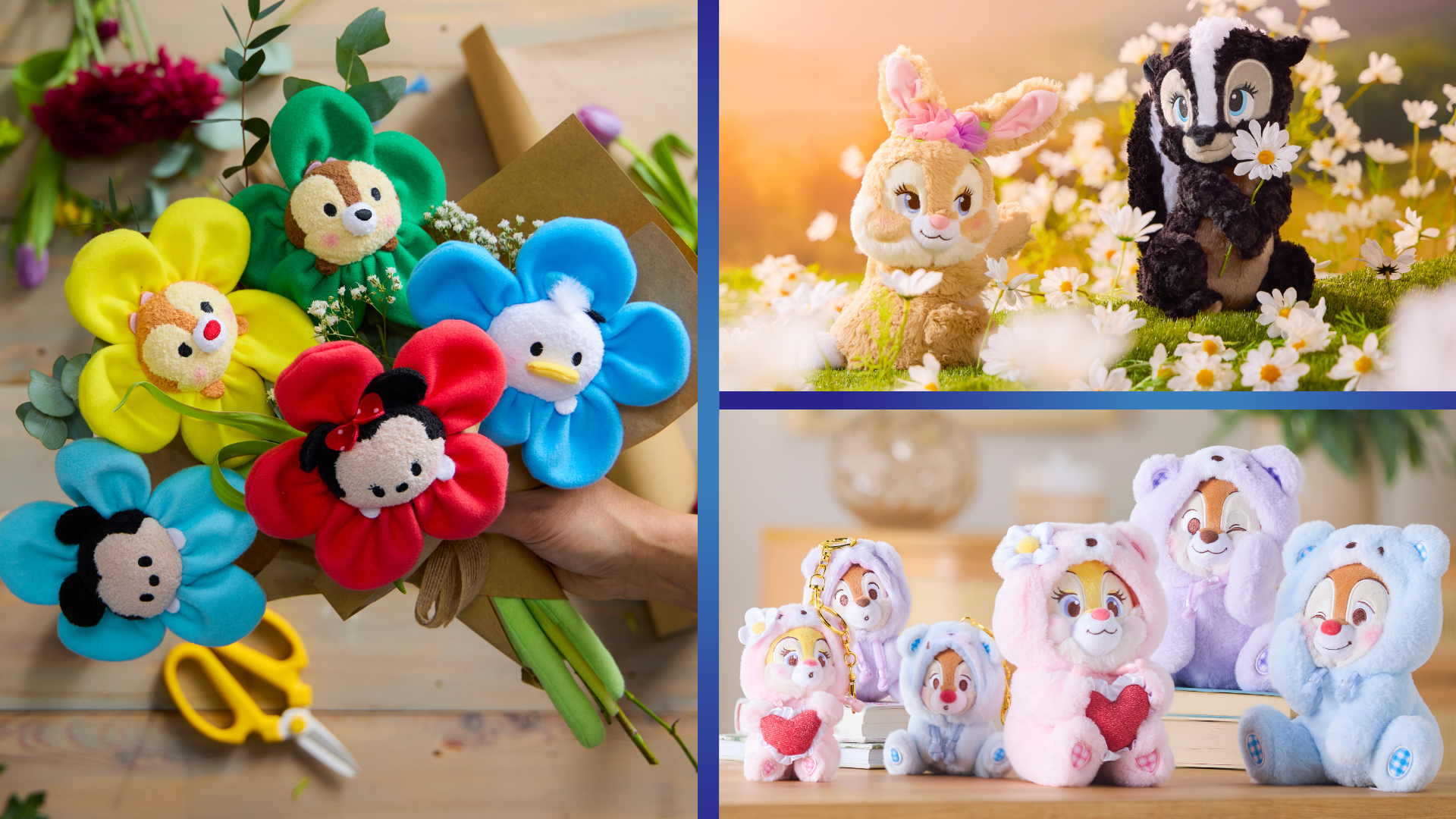
Amanda gave the example of choosing a retailer like Primark and making the lines of a character a bit less “fuzzy” when appealing to a Gen-Z audience, or targeting a specific local market like the recent Sakura Plush Collection from Disney Store Japan that plays into an important aspect of Japanese culture.
There is a way to “stretch” the character without losing sight of his identity and the decades of beloved storytelling that has shaped him. Establishing brand guardrails helps Amanda, the teams at DCP, and the partners they choose to collaborate with to be imaginative while still staying true to the integrity of Pooh Bear’s stories.
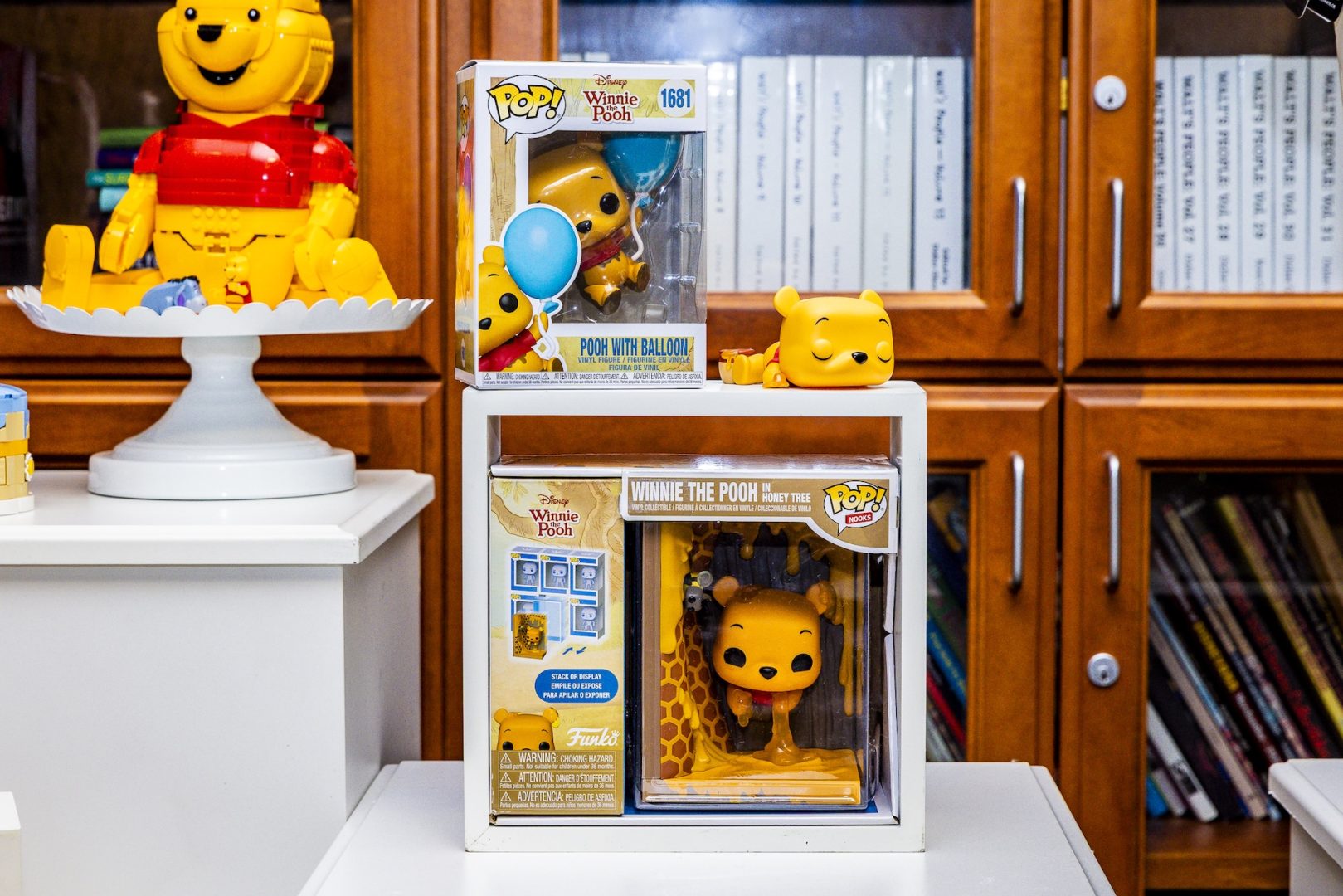
“It’s a true honor that brands want to work with us,” shared Amanda. She explained that to ensure characters continue to connect with audiences, DCP needs great brands to illustrate Disney franchises in a way that is differentiated for their audiences. Take Funko for example, whose products possess a very distinct look and feel, bringing something unique to the consumer, all while drawing authentic inspiration from Winnie the Pooh.
Amanda also talked about the importance of giving competitors within the same product categories unique stories or creative aspects to work with as they talk to different audiences and keep the brand special.
Why is Winnie the Pooh Still so Beloved After 100 Years?
As we celebrate 100 years of Winnie the Pooh, I found myself wondering truly what it is about this sweet character that has helped him remain so culturally relevant and genuinely cherished by fans over the years. Kevin and Amanda, along with Disney Legend and animator Mark Henn, shared some thoughts that helped solve this mystery.
Product is the first touchpoint a child may have with Winnie the Pooh if parents are choosing to avoid screentime or do not have access to a Disney Park, so it is an extremely valuable introduction to the world of the Hundred Acre Wood.
Amanda shared that “Everything we do in product is to bring the characteristics of those characters out into the products, so that the consumers understand them.”
Winnie the Pooh and his friends are recognizable characters that transcend cultural and geographical boundaries. Their appearance in product can be adapted as needed, especially by regional Disney teams around the globe making sure they are presenting characters to audiences in a way that resonates with them. “Pooh is a real character, and all of these friends – if you think about how he interacts with Piglet or how he interacts with Eeyore – that can go across any generation or any culture,” said Amanda.
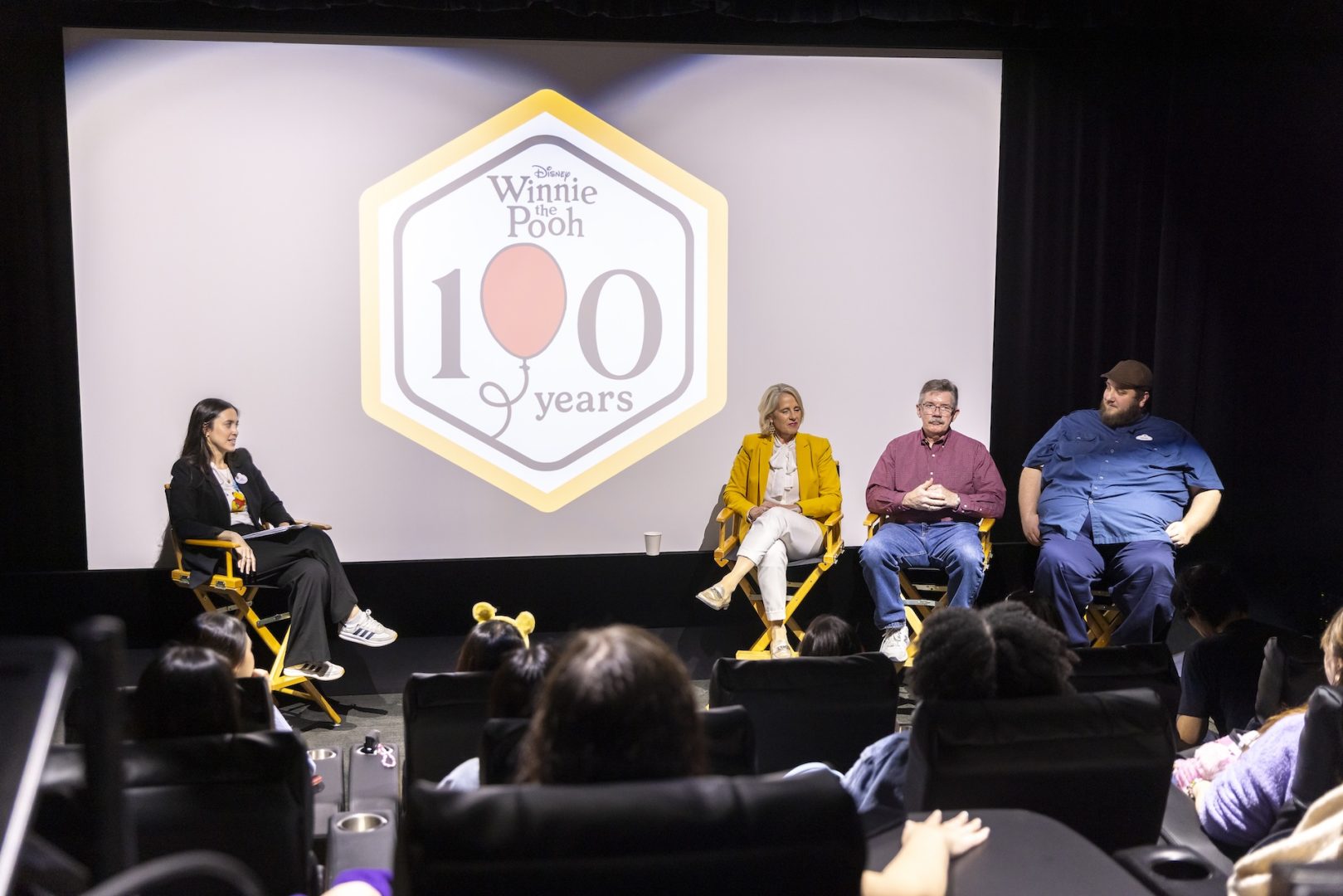
Having worked closely on the character of Winnie the Pooh, Disney Legend Mark Henn noted that the art created by Disney animators continues to be the inspiration and the primary reference point for merchandise design.
Mark said he did not feel compelled to change Pooh when stepping in to animate him for the 2011 Walt Disney Animation Studios film Winnie the Pooh, but that the job rather felt like picking up the baton and carrying it in a relay race, with the goal of continuing this character’s legacy through his sincerity, humbleness, interactions with other characters, and signature “rumbly tumbly.”
There’s something so humanizing and genuine about him, and Mark shared, “He’s naive, maybe, but he has a real sincere heart, which for me as an animator and as an actor is something I’ve always gravitated to in the characters I’ve enjoyed animating.”
Kevin echoed Mark’s sentiments, saying, “I think one of the great things about the character is that he’s so steeped in wisdom that he himself does not always realize he’s giving, and that’s so timeless.” This simple but prophetic nature that Pooh Bear possesses presented endless storytelling potential, which is what drew Walt and early Disney studio artists into wanting to bring this character into the fold 60 years ago.
One of highlights of working for the Archives that Kevin revealed is having the opportunity to touch all areas of The Walt Disney Company and connect with people across different disciplines, including Disney Legends like Richard M. and Robert B. Sherman, whose music helped to define the franchise early on.
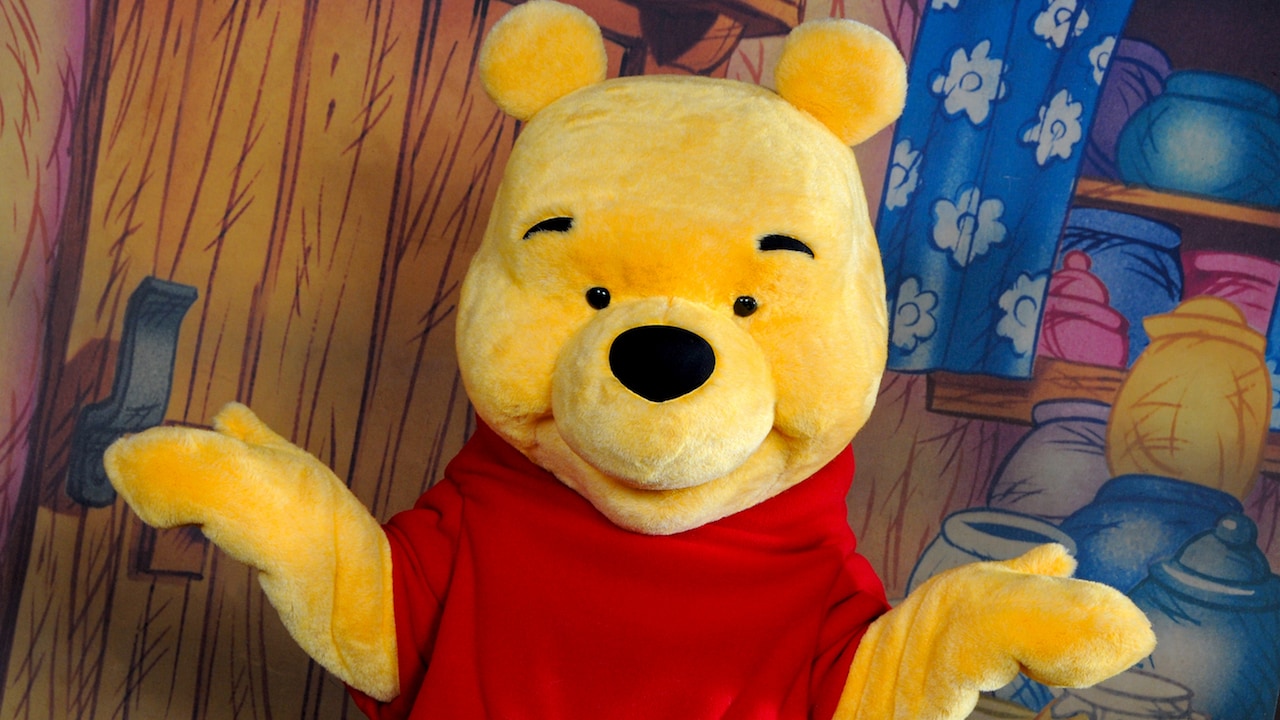
Kevin shared that Richard Sherman once conferred how “Winnie the Pooh is just like all of us. He shows all of the emotions that we show, he sees the things that we see, he struggles like we do” – and I feel like this perfectly sums it up.
We wish Winnie the Pooh a happy 100th birthday, and hope that this character continues to bring happiness and comfort to all for another 100+ years. Stay tuned here on the Disney Parks Blog for more information about how we are celebrating Pooh Bear’s anniversary across parks and products, starting with this roundup of adorable new merchandise!