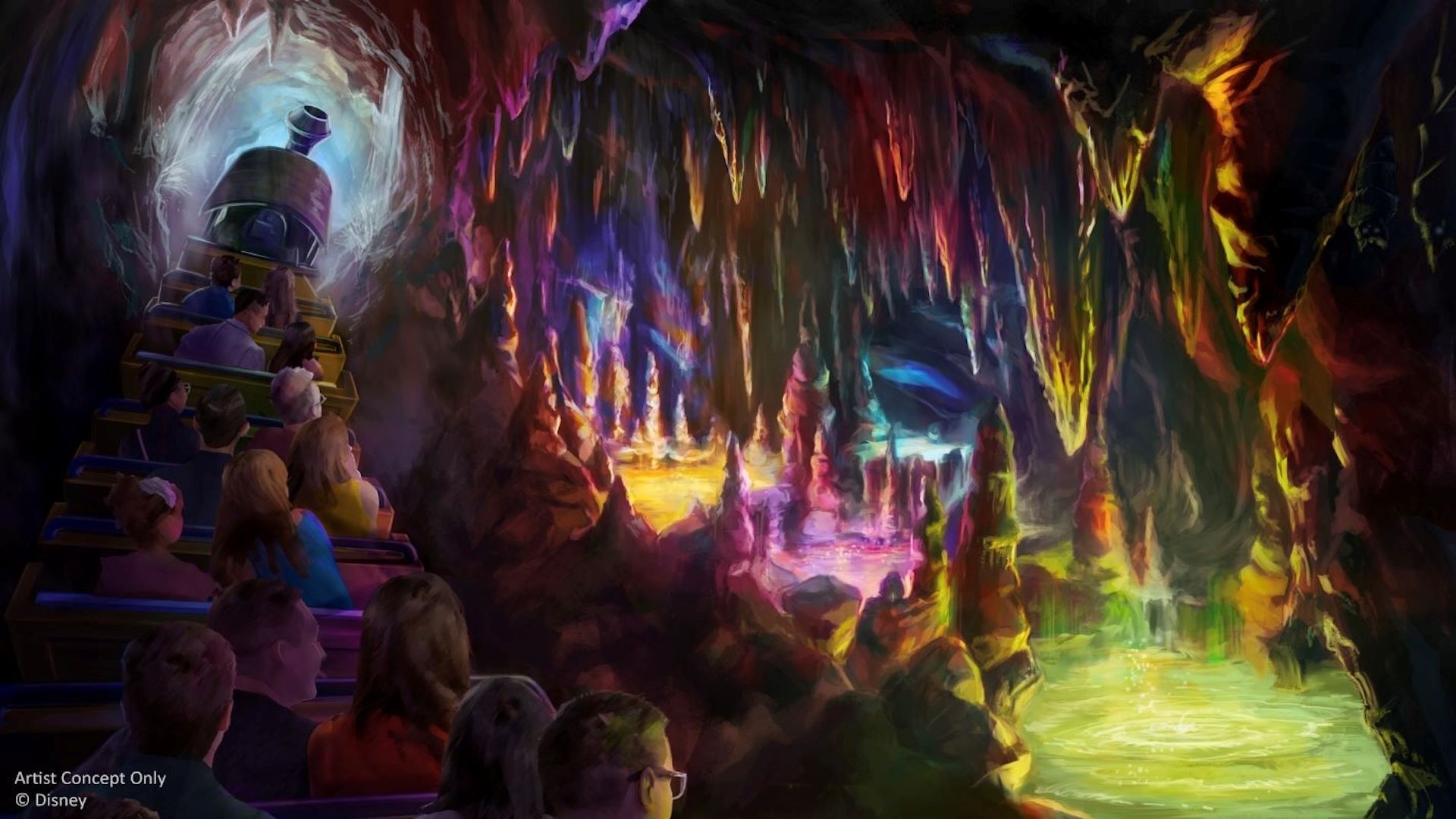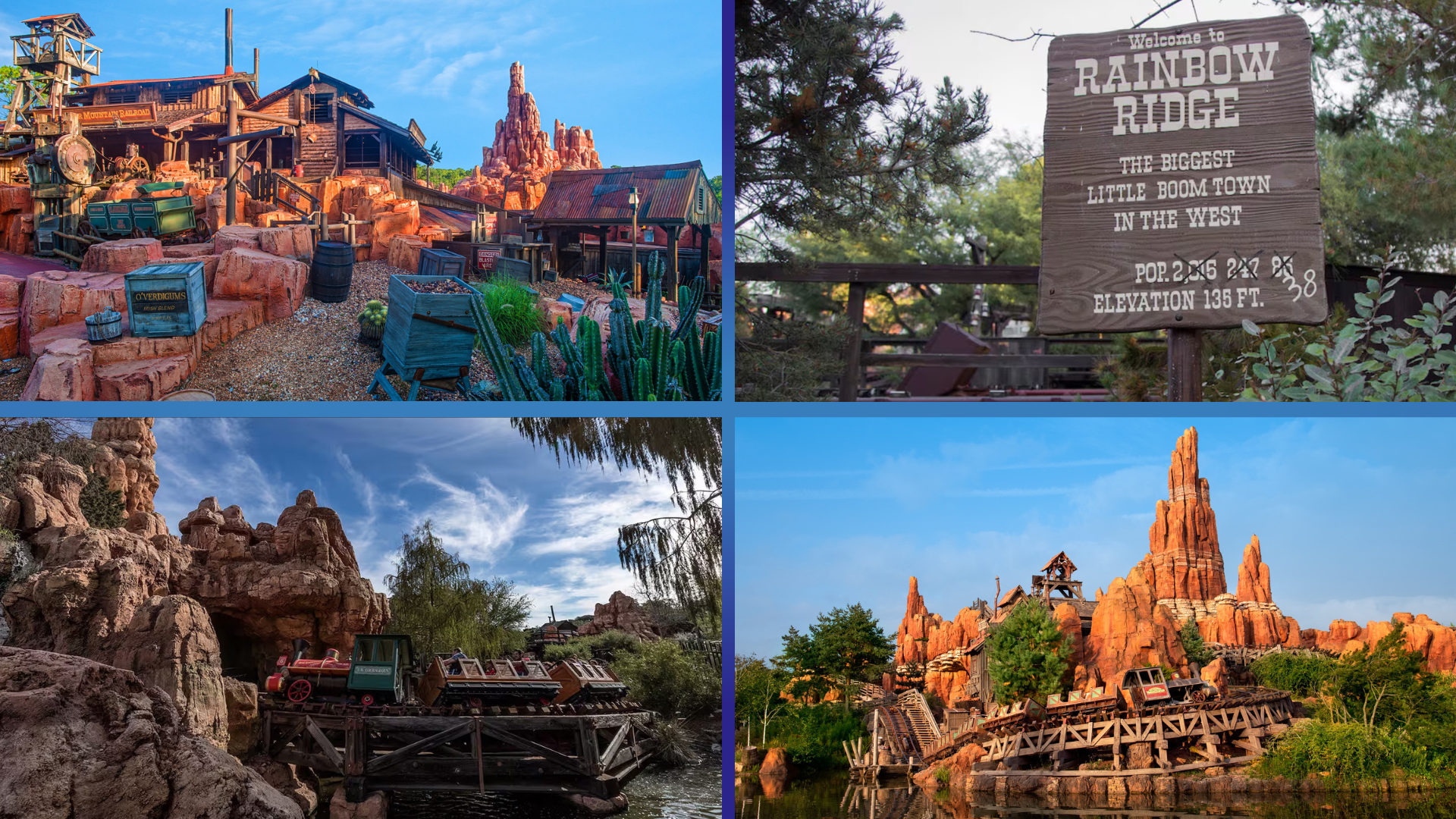





Runaway mine trains, pitch-black bat caves, and boomtown dreams. Big Thunder Mountain Railroad has been thrilling guests at Disney theme parks across the world for generations, leaving an unforgettable mark on frontier storytelling and Disney fandom alike.
Yet beyond the twists, turns, dips, and dives lies a richly layered legend shaped by gold fever and a mountain with a particular taste for chaos and adventure. Around the world, Big Thunder Mountain tells a story rooted in frontier myths, mysterious forces, and the rise (and eventual fall) of those who dared to dig too deep, and it’s long been one of my top picks for an adrenaline rush on a family vacation to the parks.
Pull out your lucky horseshoe, dust off your cowboy hat, and get ready to get back in the saddle. With the mine trains of Big Thunder Mountain Railroad preparing for a long-anticipated return to the loading station at Magic Kingdom park, let’s unearth the lore behind one of Disney Parks’ most enduring attractions.
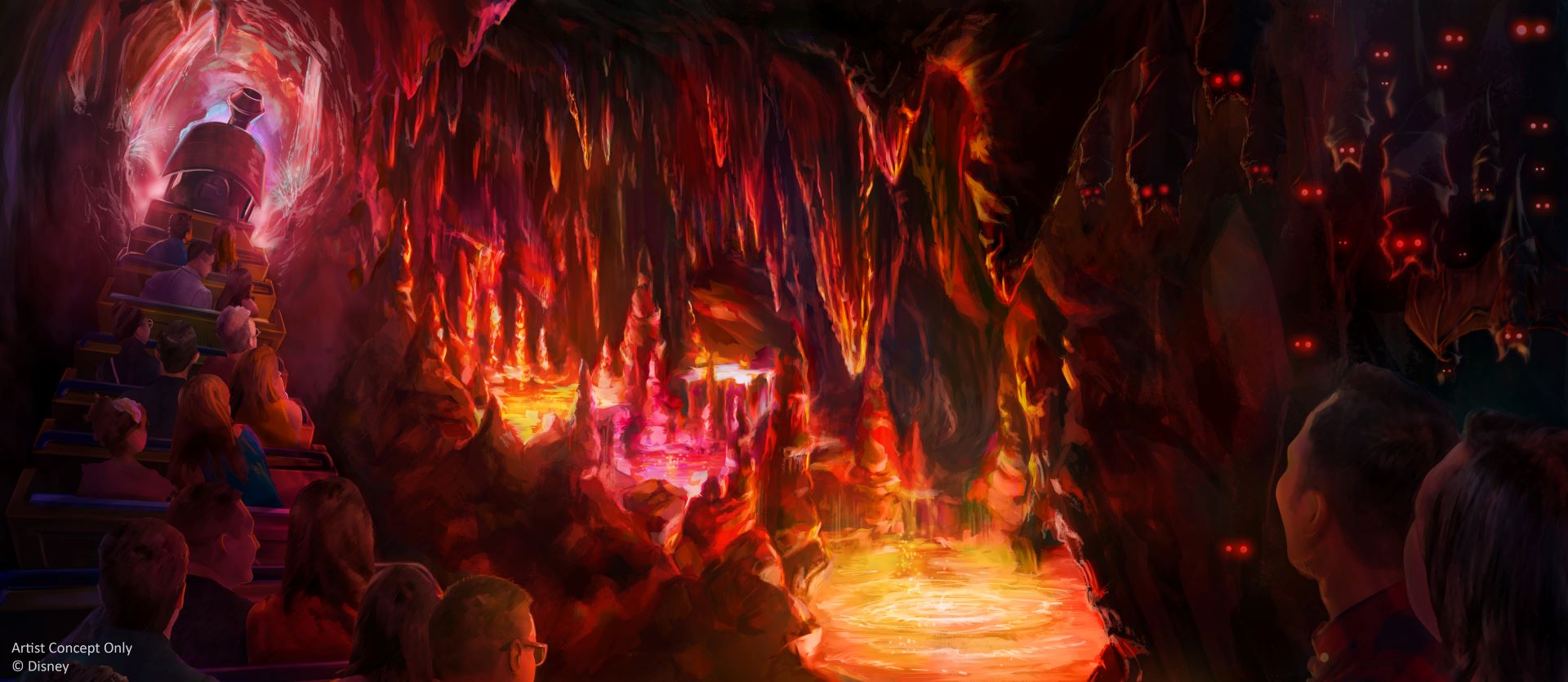
Take on the Wildest Ride in the Wilderness at Magic Kingdom
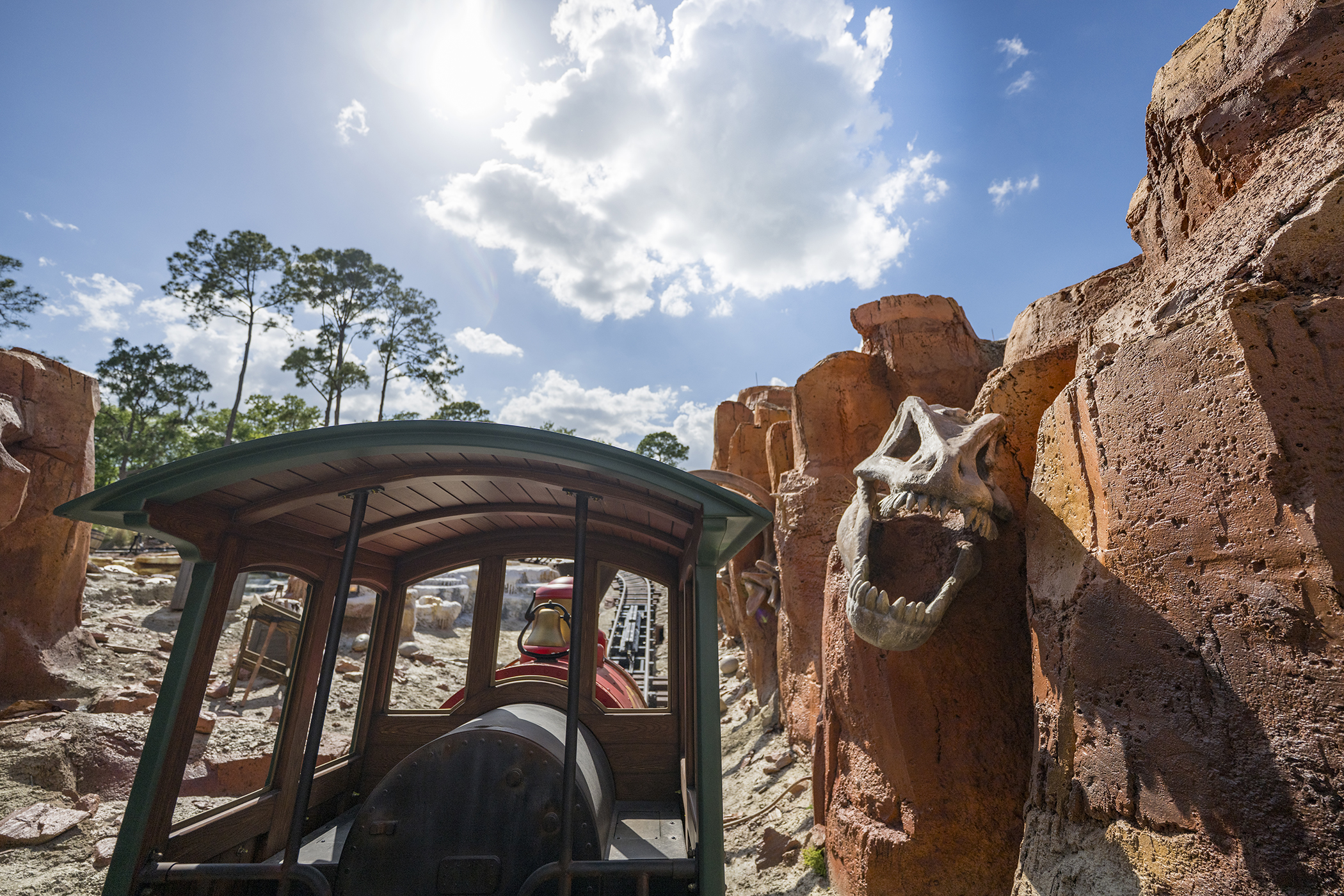
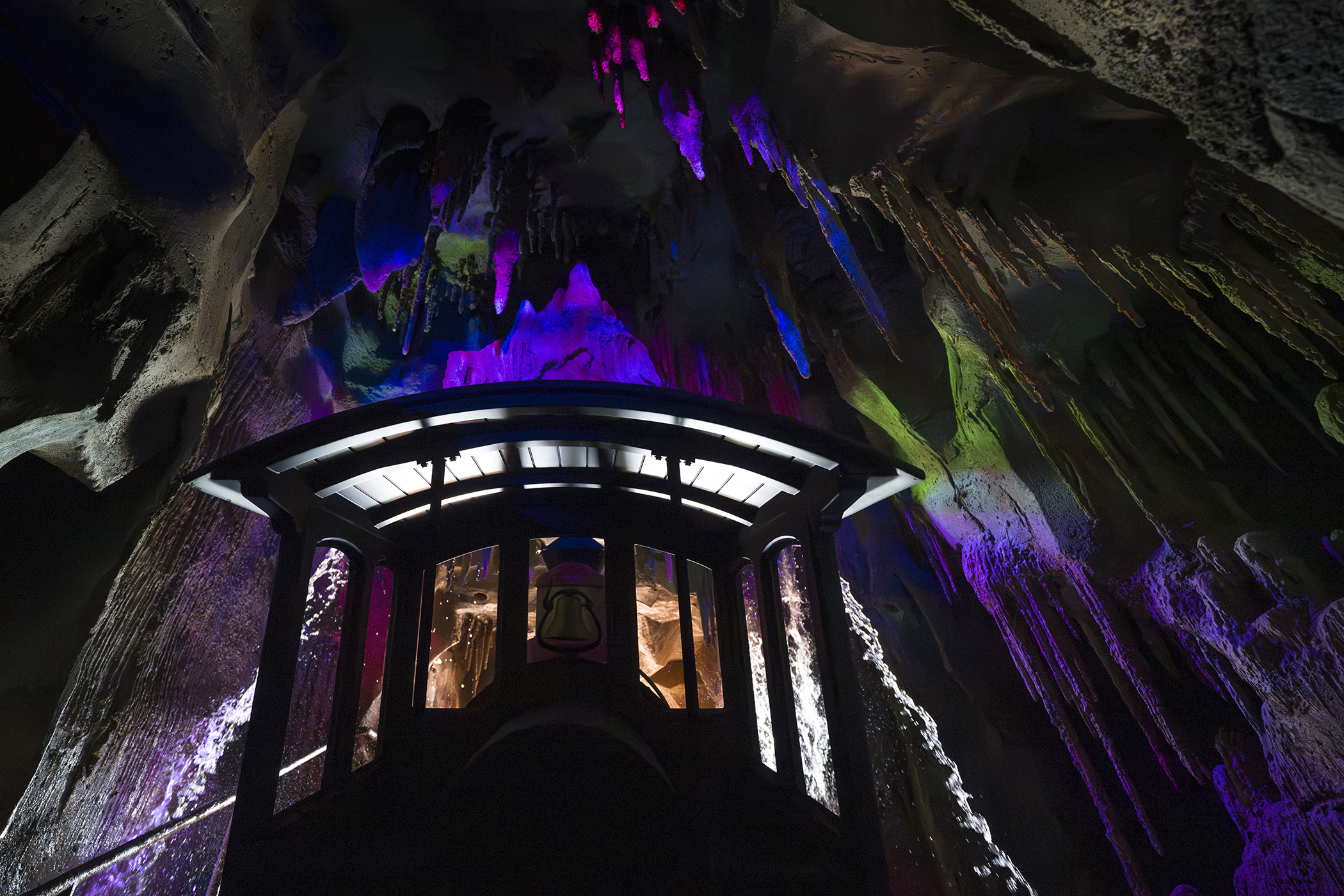
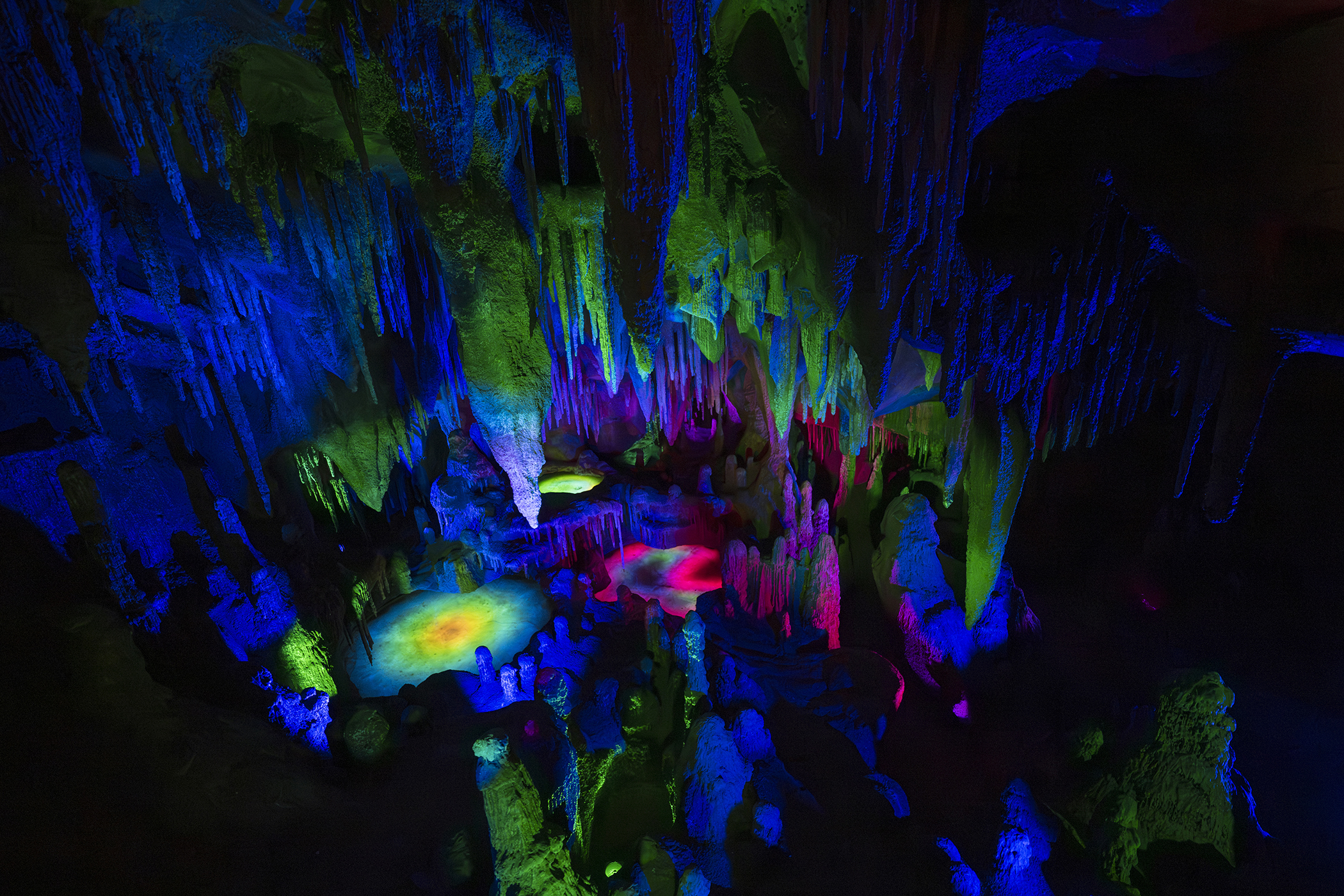
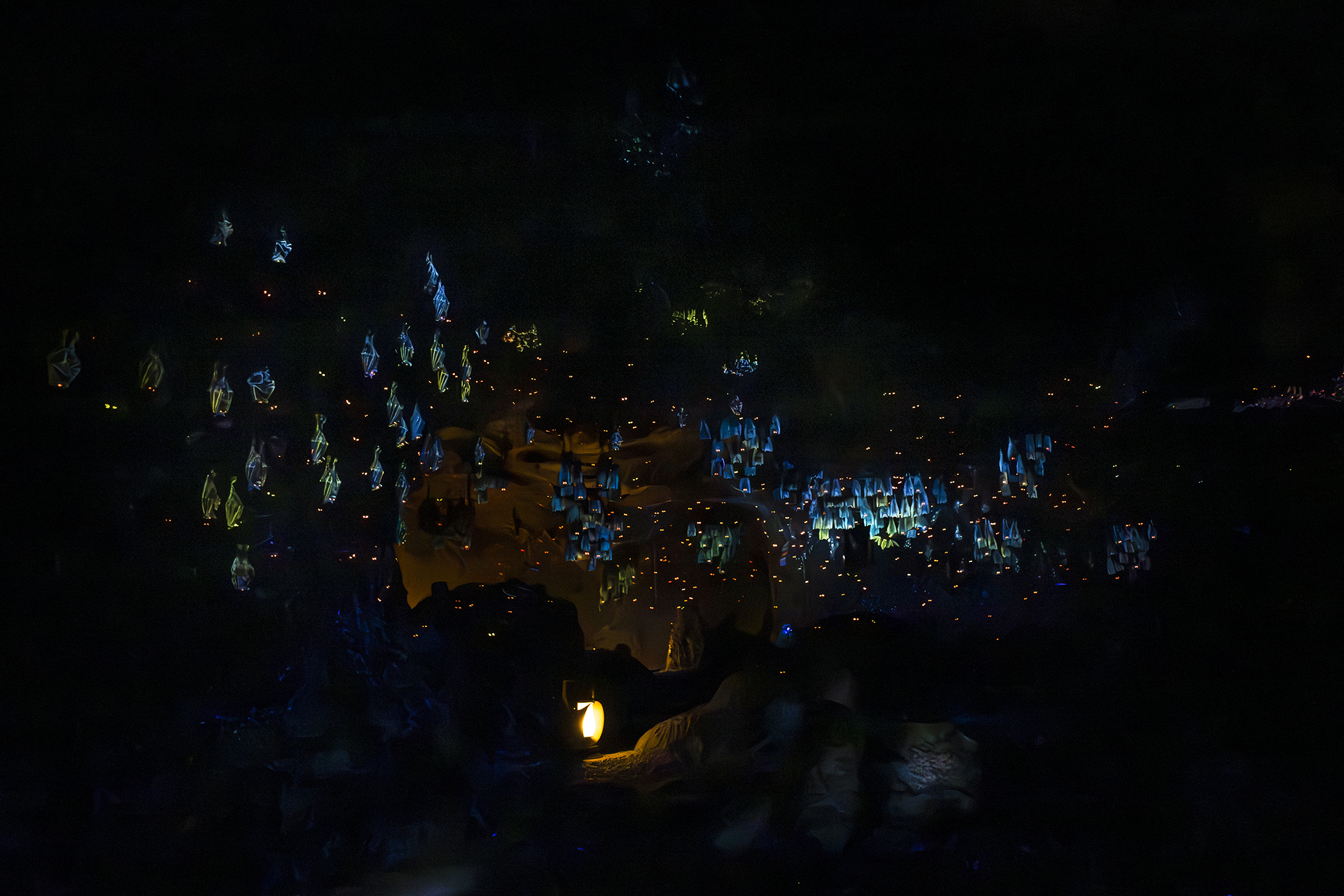
On May 3, the iconic Big Thunder Mountain Railroad roars back to life at Magic Kingdom, marking its triumphant return to Frontierland with new magic and a renewed sense of adventure carved deep into the mountainside.
The legend of Big Thunder at Walt Disney World traces back to the old days of the American frontier, when prospectors from across the country flocked west during the early days of America’s first major gold rush.
Many say that fortune favors the bold, but unsuspecting passengers who are ready to board the runaway trains will soon be reminded just how wild the wilderness can get, and what secrets lie within the might and mystery of Big Thunder Mountain.
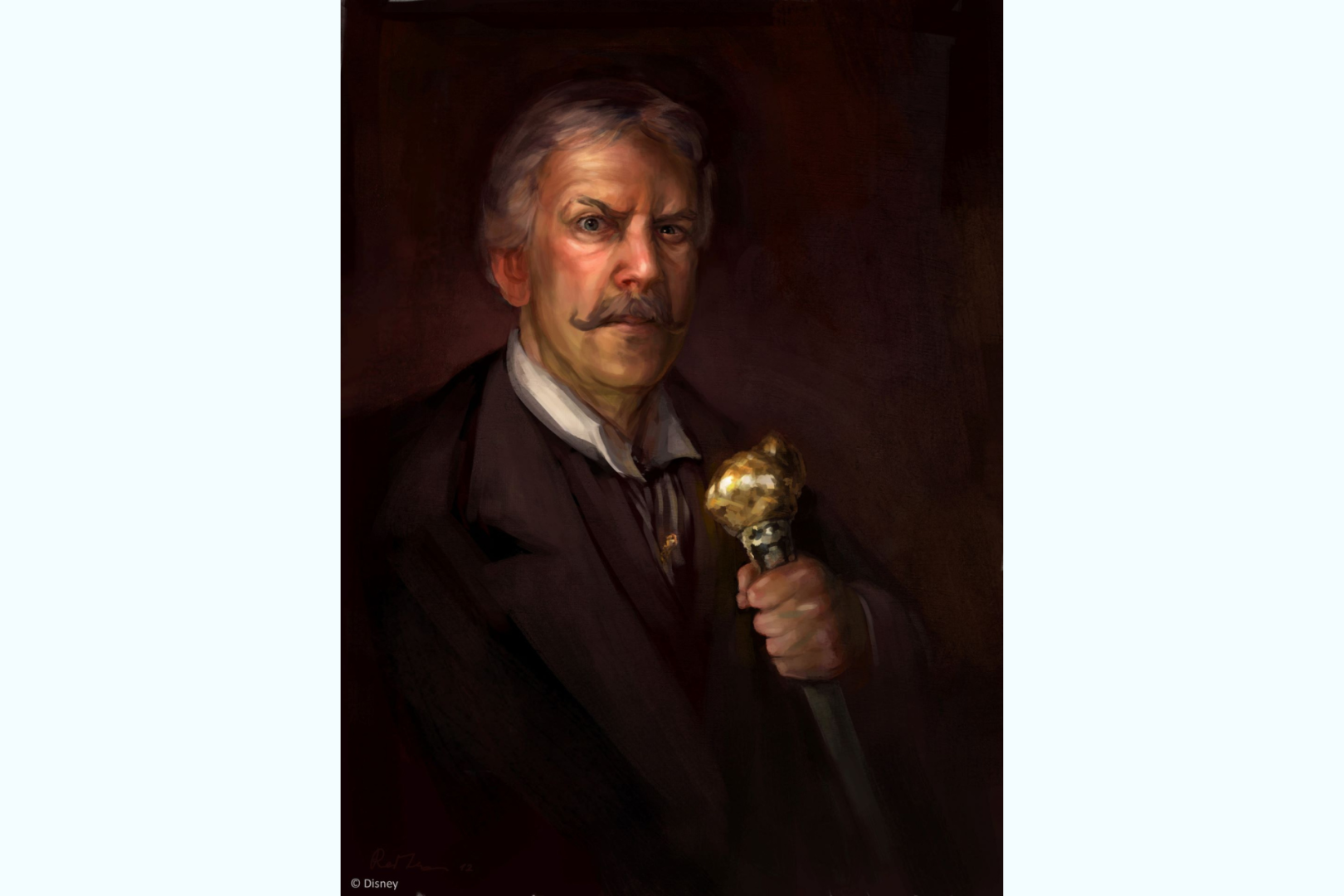
First Off: Who is Barnabas T. Bullion?
Remember this guy? Meet Barnabas T. Bullion, the eldest son of a wealthy and powerful mining family. Years ago, Bullion received a land grant from the United States government, giving him ironclad land rights to the Western River Valley (including Thunder Mesa and Big Thunder Mountain) in the Great American Southwest.
Upon receiving the land, Bullion was determined to extract every ounce of gold hidden deep within the mountain, motivated to relentlessly mine the mountain until he had yielded all its treasure. Alas, the Big Thunder Mining Company was officially founded in 1850, sparking Bullion’s never-ending quest for gold and launching an ambitious operation driven by his unrelenting belief that future fortunes lay buried beneath the red rock.
At first, the gold flowed freely. But as nature began to push back and frustrations began to mount, the easy pickings started to dwindle day after day. Miners were forced to dig deeper and deeper into the mountainside.
Yet strange, unexplainable things quickly started happening. Despite Bullion’s efforts to continue to push forward at full speed, machines and equipment began to fail. Cave-ins shut miners out of rich strikes, and rumbles of thunder came from deep inside the angry mountain.
As Bullion’s grand operation crumbles beneath the weight of the protective forces of the mountain, a substantial vein of gold hasn’t been found in months inside the mines, and very few miners (outside a few, brave seekers) remain based in the area. But keep your eyes out on your next train ride: there’s plenty of gold to be found around the mountain!
Big Thunder Fun Fact:
- Bullion is also a key member of the Society of Explorers and Adventurers (S.E.A.), a group that was established in the early 1500s to conduct research for the advancement of navigation and exploration. The group quickly grew to become an organization that traveled the world in search of knowledge, adventure, art, and precious cultural artifacts, and includes other members such as Lord Henry Mystic, Harrison Hightower III, and my personal favorite, Dr. Albert Falls.
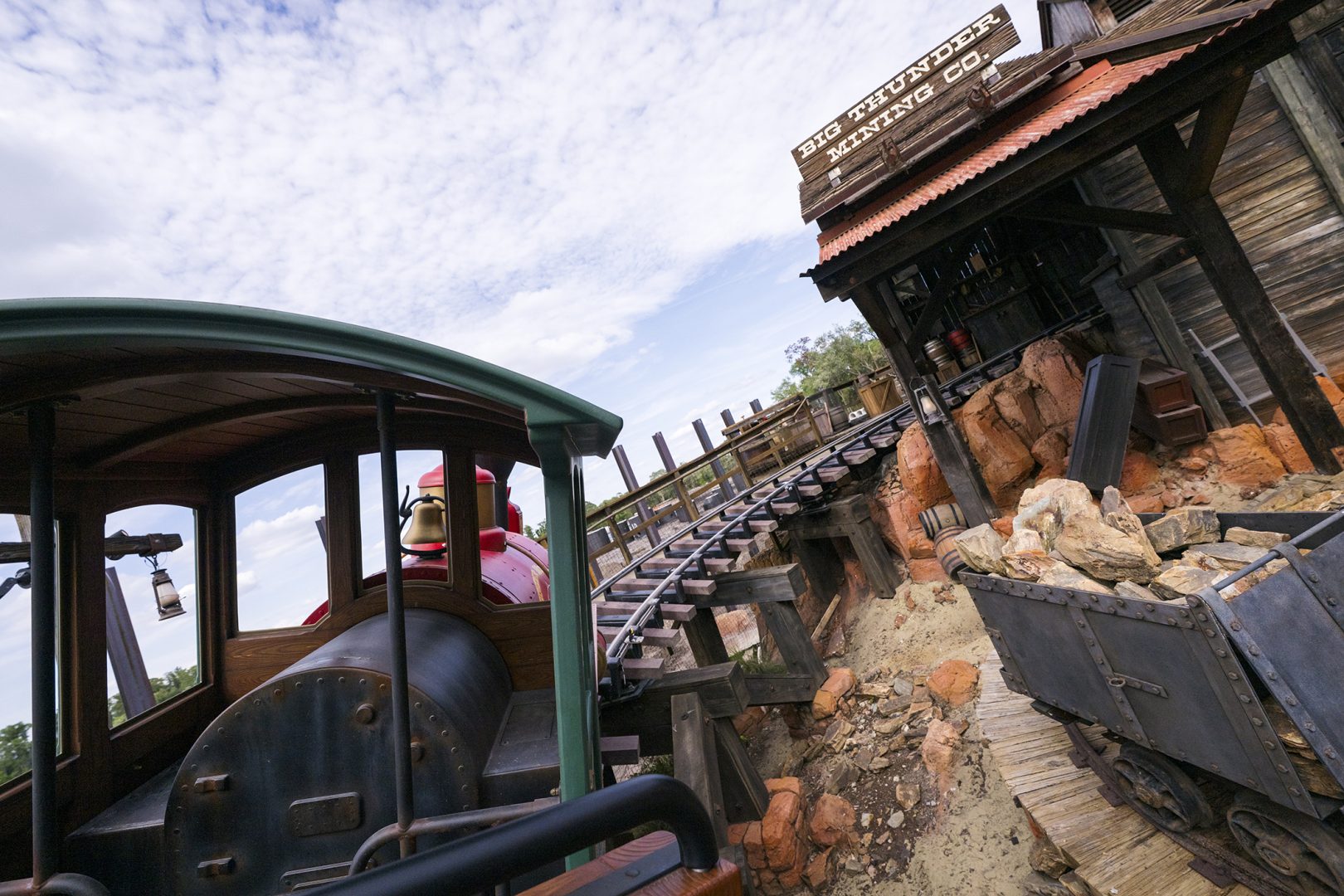
The Story of Tumbleweed
Once a flourishing boomtown working hand in hand with the prosperous lifestyle of a miner, the town of Tumbleweed was the beating heart of the region’s Wild West ambitions. Complete with a boarding house, a company store, a saloon, a jail, and several other establishments, Tumbleweed was once a soaring town full of high hopes and spirited dreams, accompanied by Big Thunder’s early success.
But as the mines fell silent, Tumbleweed began to dwindle. The steady flow of fortune dried up, and hardship and an unforgiving drought has stacked the odds against its favor; the town has now grown as lifeless as the surrounding desert, with its once-bustling streets now coated in dust and despair.
Yet the people of Tumbleweed cling to hope whenever it can be found on the horizon. Enter Professor Cumulus Isobar, “Rainmaker Extraordinaire and Purveyor of Magical Elixirs,” a scholar who has recently gained local popularity as someone who guarantees that his paying customers would not go dry for long.
His arrival has brought slight optimism among locals, as his mere presence has sometimes brought ain into the forecast with an eventual flash flood result if the nearby ground had baked too long in the sun. Whether he is a miracle worker or a master showman of the Wild West remains to be seen, but Isobar has become the town’s latest gamble in its quest to return to its former glory.
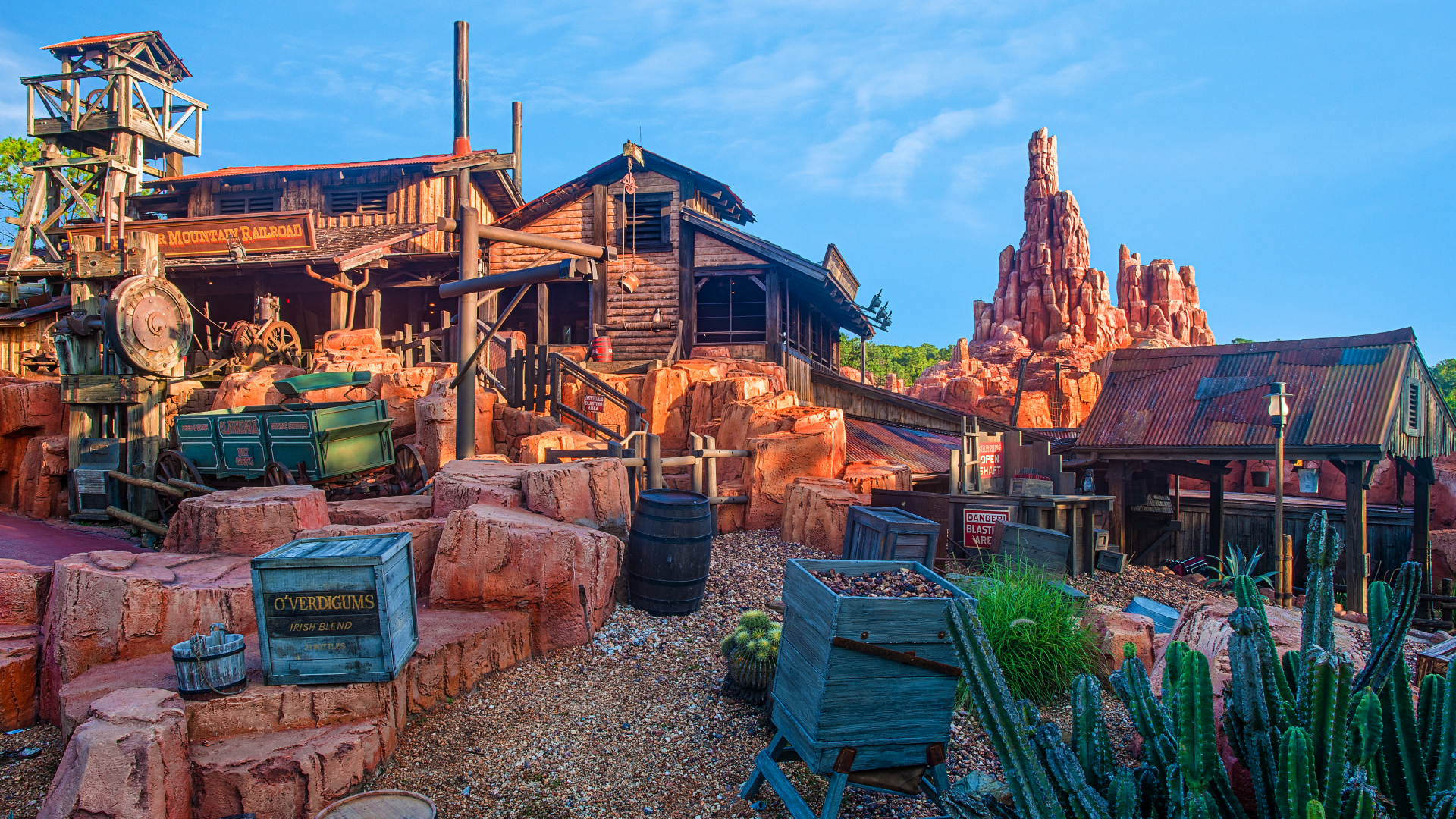
What Will I See in the Big Thunder Mining Offices Before Boarding a Train?
In the late 1800s, the forces of Big Thunder Mountain are at an all-time high, with miners worrying of mischievous spirits (some think they are beginning to hear whisperings of cautionary messages) and with cave-ins happening more often than ever.
Yet the most troubling aspect of all? The narrow-gauge engines are rolling out of the makeshift station (buried down inside a sloping, cactus-sprouting hill) with no human hand at the control, racing driverless at high speeds along the spiraling steel and wooden track leading deep into the mountain.
If you are one of the brave souls willing to venture into the mines, you’ll enter the Big Thunder Mining Offices on the second level before winding your way down into a large open shaft where the trains are being kept.
Passing by a memorable “No Drinking, No Fighting, No Whistling, No Kidding” sign, a blown open safe, Bullion’s land grant as signed by James K. Polk, and a slightly-sinister portrait of the company’s looming founder surrounds you in the lore of the mining company, while the sweeping landscape across the hills of Big Thunder Mountain put you in the middle of the allure, mystery, and romance of the Old West.
Passing by the Foreman’s Post (operated by the domineering watcher of the mine, G. Willikers), the Fusing Cage, the blasting machines, and the ventilations services leads you to the heart of the mining operation below, where flickering lanterns, busy miners, and railway workers bustle about.
As a train pulls into the station, the time is almost near and the clock is already ticking: you’ll soon be ready for a dive into the depths of Big Thunder Mountain, plunging you into the thrilling chaos of the wildest ride in the wilderness.
Big Thunder Fun Fact:
- Big Thunder Mountain Railroad at Walt Disney World features several open-air trains, including “U.B. Bold,” “U.R. Daring,” “U.R. Courageous,” “I.M. Brave,” “I.B. Hearty,” and “I.M. Fearless.”
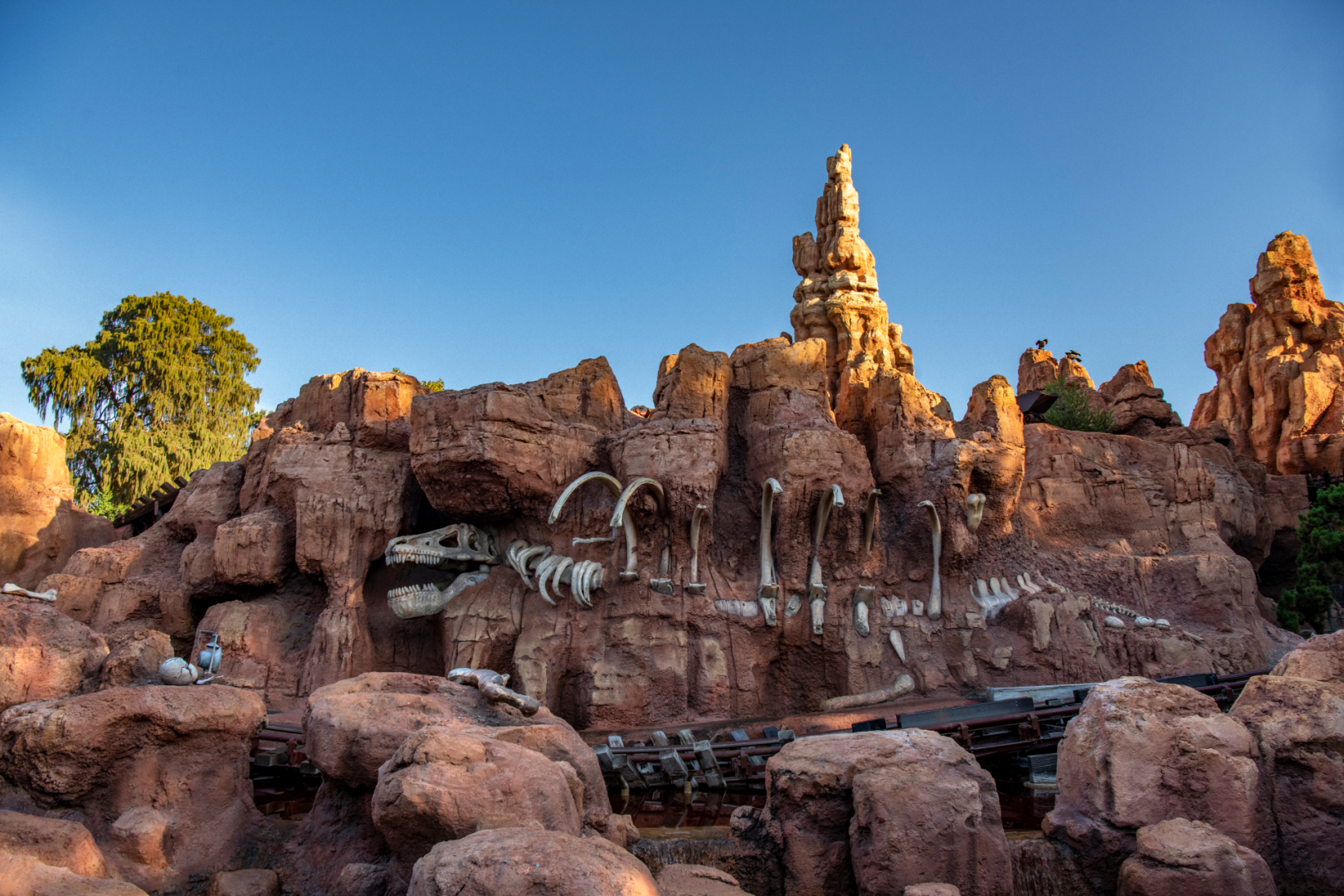
Discover the Mystery of Big Thunder Mountain Railroad at Disneyland Park
Growing up in Southern California, learning about James W. Marshall’s discovery of gold at Sutter’s Mill in 1848 was a milestone moment for me and many others in 4th grade, providing a lesson that opened the door to real-life stories of fortune, ambition, and failure that shaped California’s earliest years.
Those same Gold Rush dreams once gave rise to countless boomtowns across the West, such as on the outskirts of Big Thunder Mountain Railroad, with many of them flourishing almost overnight before fading into the sunset like a cowboy on his final stand.
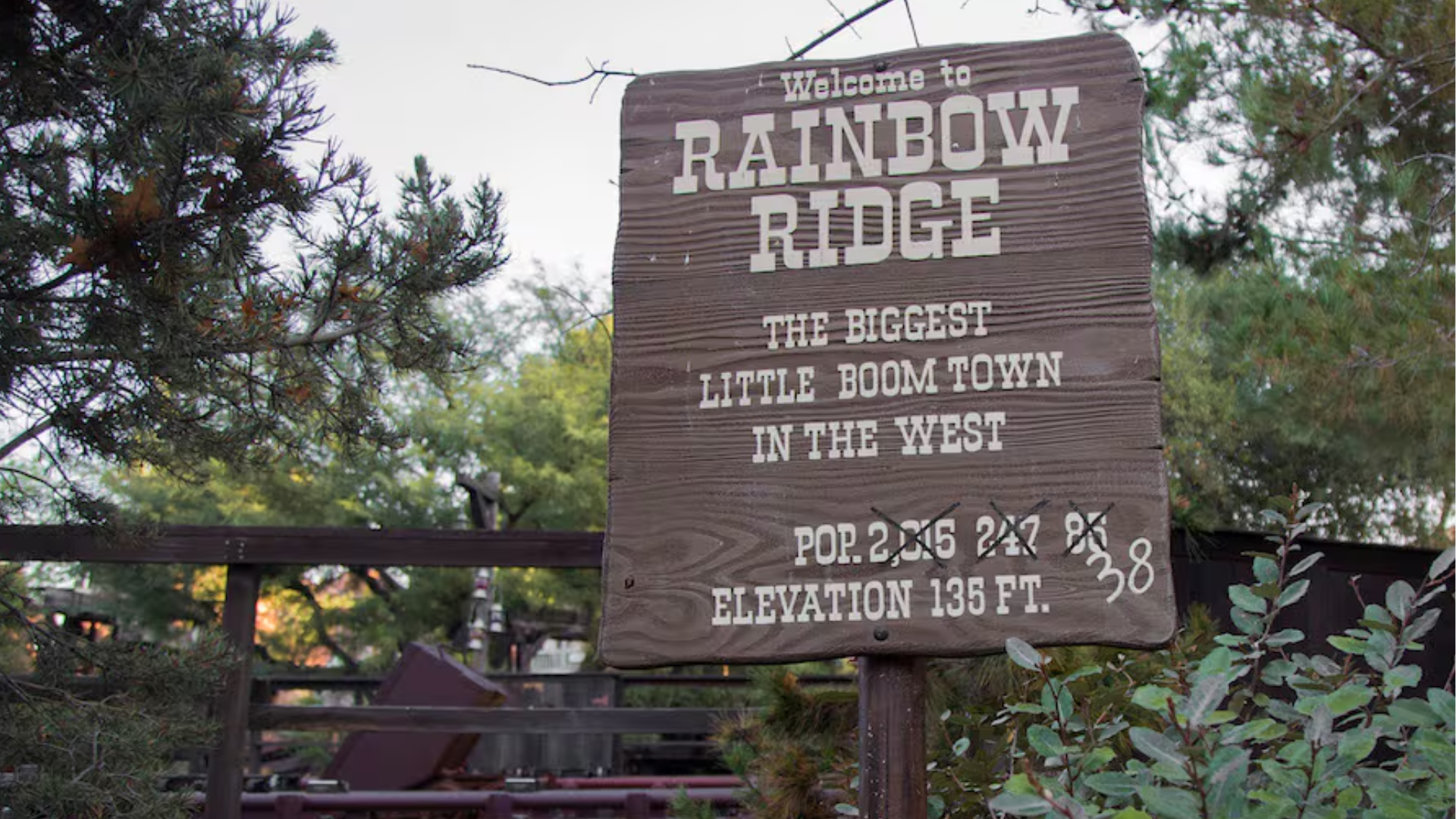
The Story of Rainbow Ridge
At Disneyland park, that history comes to life in the Frontierland town of Rainbow Ridge, nestled at the base of the famed Big Thunder Mountain. Once positioned as a hopeful settlement for miners and travelers alike, this small-town setting includes two saloons, an assay office, a general store, and a bank, surrounded by a quiet tension that hints at the mysteries buried deeper within the surrounding mines.
For years, this sleepy town remained largely untouched. But in the late 1860s, everything changed when an old prospector stumbled upon a few gold nuggets on the mountain’s slopes. His discovery sparked a sudden frenzy, immediately attracting a flurry of first-time miners, gamblers, tinhorns, and outlaws looking to hit it big and strike it rich.
While a handful found early success, many of these rough and tough prospectors ended up going bust and fled the town empty-handed, with some blaming their own misfortune on the supernatural elements found in the mountain itself.
Big Thunder Fun Fact:
- As your train ride comes to an end, look to your left inside one of the town shops to spot the same portrait of Bullion that can be found in the Disney World queue!
On your next railroad journey, take a closer look and you’ll notice signs pointing to nearby locations sprinkled throughout Frontierland: Dinosaur Gap, Spiral Butte, Coyote Canyon, Never Mine, and Busted Flats. Together, these names map a region steeped in legend around Big Thunder Mountain, with each place tied to reports of strange noises, mysterious rumblings, and supernatural forces that dwell deep within the mountain.
Yet hope surged again in 1880 as organized efforts gave way to the creation of the Big Thunder Mountain Mining Company, bringing renewed hope and deep ambition to the once-forgotten region. The operational facility yielded quantities of gold for several years, but by 1883, the surface veins began to run dry.
As miners were forced to dig deeper into the mountainside and dynamite began to be used to blast holes into the hard rock, strange circumstances began to take place throughout the area. Eerie noises swept through newly opened mine shafts, cave-ins became frequent, equipment failed, and the mine trains that you’ve come to know and love began to roll out of the station with no engineer in control.
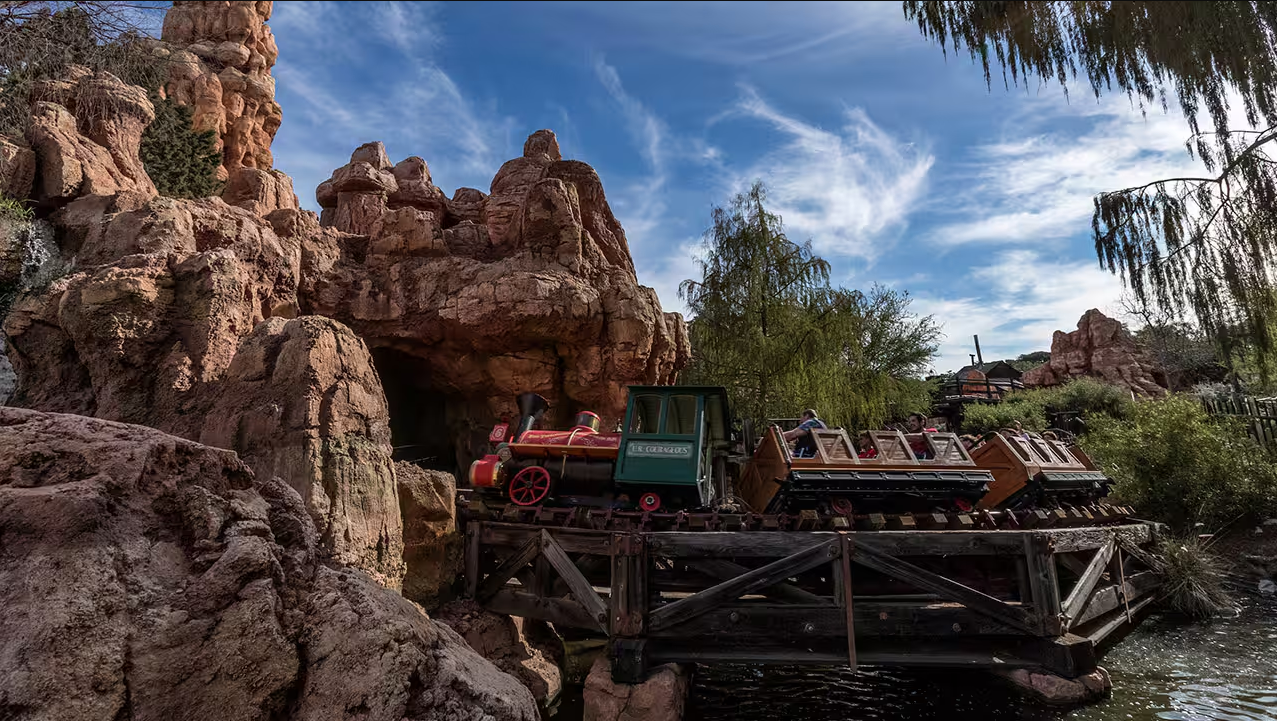
Now, as guests board those very mine trains, they will see the Big Thunder Mountain Mining Company has become a shadow of its former self, with a few undaunted souls still working in the mines and consistently coming face-to-face with the mountain’s supernatural forces of mayhem.
The red and orange hoodoos, sandstone buttes, and windswept canyons may appear friendly from the outside, but plenty of twists, turns, and surprises are in store for those who dare to challenge its secrets.
Big Thunder Fun Fact:
- Big Thunder Mountain Railroad sound effects are legendary – the sound of the Big Thunder trains were mixed into the memorable mine chase sequence in 1984’s Indiana Jones and the Temple of Doom.
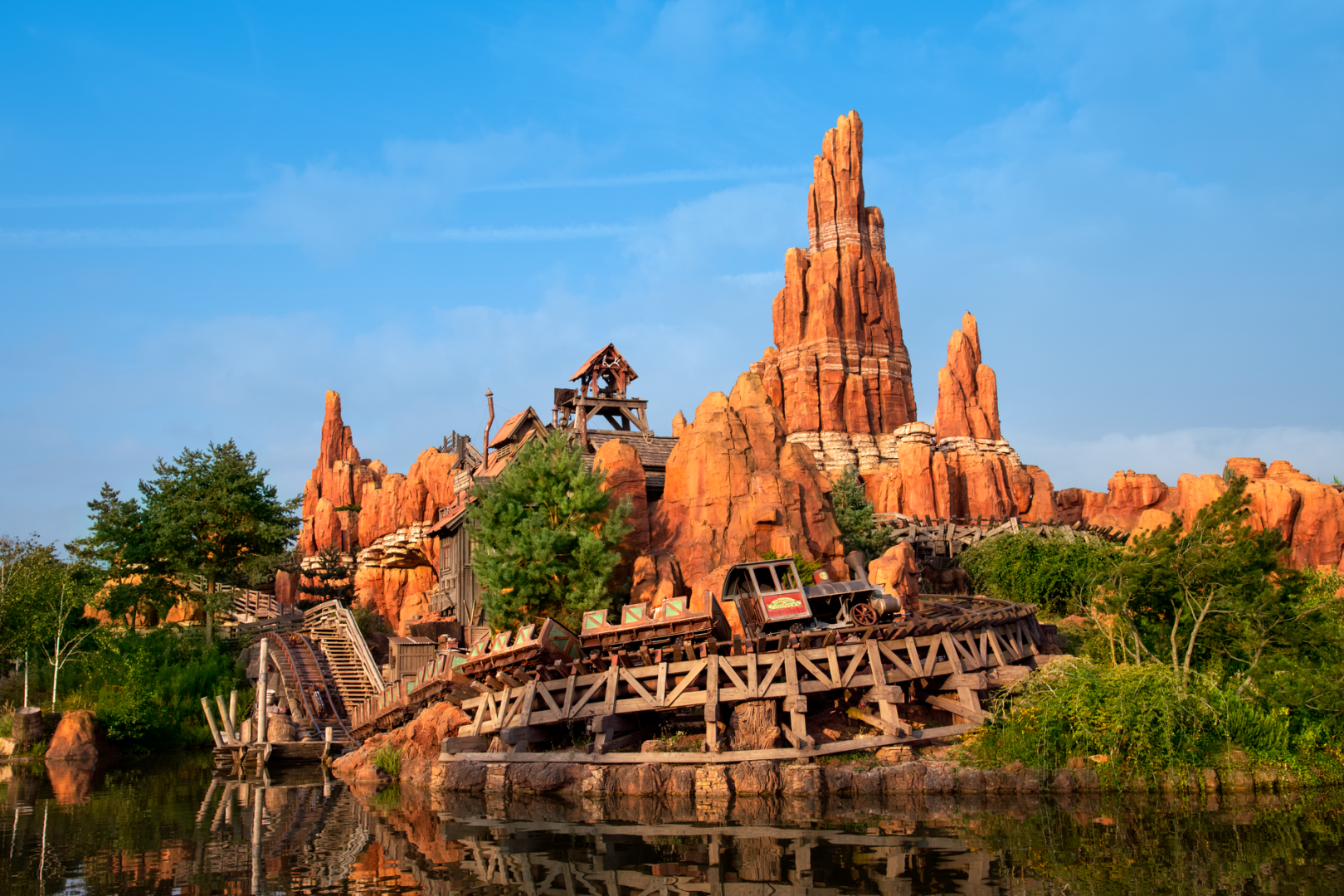
Plunge Through the Tunnels of Big Thunder Mountain at Disneyland Paris
The town of Thunder Mesa looms large at Disneyland Paris, with Big Thunder Mountain rising dramatically from the Rivers of the Far West as the primary icon of Frontierland. Unlike some of the other versions around the world, this particular mountain dominates the physical landscape and the narrative heart of the land together, binding the fate of the town, its local citizens, and visiting guests.
Long before guests were invited to pay the company a visit through Gold Rush mines and underwater tunnels, most of the region’s folklore was filled with warnings. Stories spread about strange noises and mysterious rumblings echoing from far below the mountain’s surface, which went a long way in keeping the area uninhabited for years.
This caution was put on hold in the late 1860s. When a prospector happened upon a few gold nuggets on the mountain slopes, curious travelers ventured west in the search for fortune and deep riches. Many of these prospectors missed the mark and hit a block in the road, but the Ravenswood family carefully staked out its claim and established the Big Thunder Mountain Mining Company, giving life to the new town of Thunder Mesa.
Who is the Ravenswood Family?
Sound familiar at all? You may know the Ravenswood family from their primary residence at Disneyland Paris, the eerie, decaying Phantom Manor located on Boot Hill just outside of town. Despite some of the strange happenings taking place inside there (the mansion is built atop a cemetery, after all), the family once stood as powerful figures in the town with ambition directly tied to the mountain below.
For a few years after founding, the mines of the company produced vast quantities of gold, temporarily invalidating the mountain’s supernatural myths. Yet once the gold found throughout the mountain became few and far between and dynamite began being used to blast holes into the mountainside, inexplicable things started to happen again.
With mine trains consistently rolling out of the station, the ghostly tales of the mountain’s supernatural forces were resurrected, and miners left the area at will over the fear of what could happen next.
Today, the Ravenswood family is gone, and the Big Thunder Mountain Mining Company operates under declining supervision. Yet for those with a lingering call to the mountain, you can still venture into the nearly abandoned workings of the mines, which will likely require stirring up the courage to take a ride aboard of the company’s mine trains that leave the station without any trace of control.
Big Thunder Fun Fact:
- Big Thunder Mountain at Disneyland Paris is unlike other versions. In Paris, the train passes under the waters of the Rivers of the Far West and the majority of the attraction is on an island.
Witness the Beauty and Mayhem of the Old West at Tokyo Disneyland
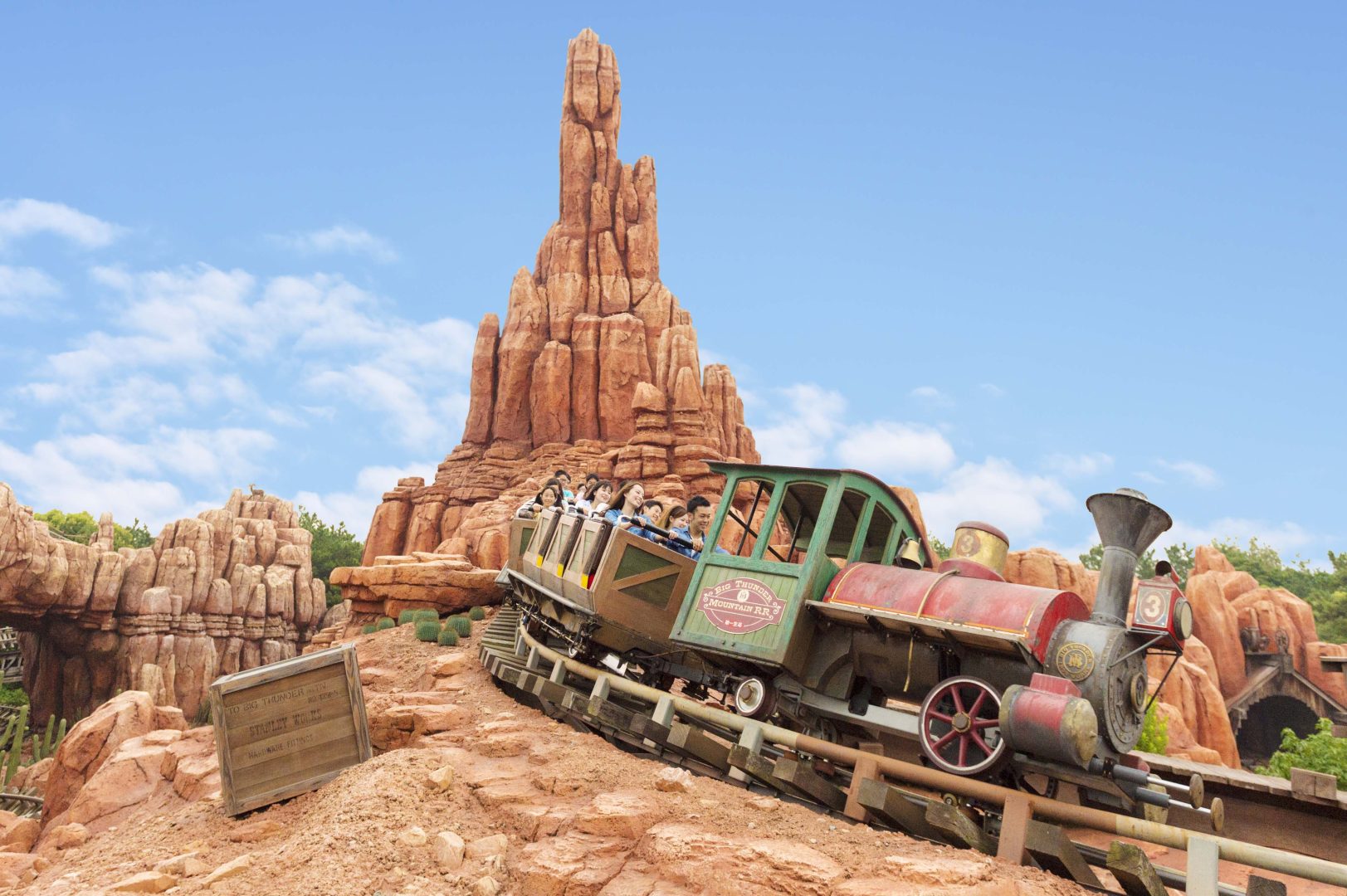
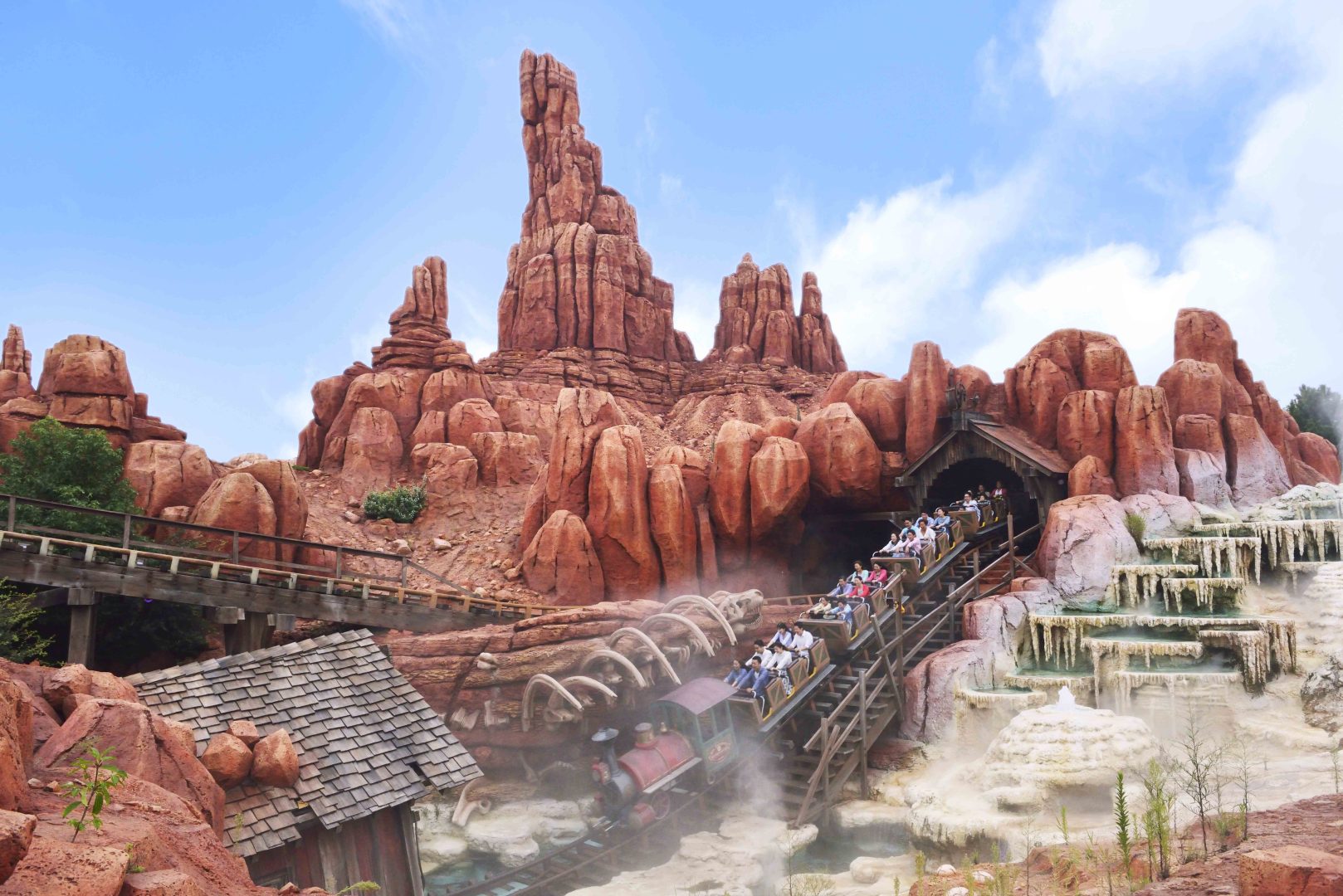
At Tokyo Disneyland, Big Thunder Mountain transports guests into an ambitious Gold Rush mining setup deep in the American frontier. Set in the late 1800s, the attraction’s backdrop reflects a once-thriving mining company whose runaway trains now tear through the wilderness long after human control has been lost.
Much like its counterpart overseas, legend says that there has long been a supernatural force dwelling deep within Big Thunder Mountain. For years, ghostly tales kept locals out of the area and largely uninhabited, until an old prospector discovered gold in the 1850s and suddenly ignited a westward rush of eager first-time miners west to search for fortune.
Around this time, the Big Thunder Mountain Mining Company rose to prominence and produced large amounts of gold for nearly 30 years, before fading away due to a declining lack of resources in the 1880s.
Once desperation kicked in and prospectors began to use explosives to dig deeper into the mountainside, the angry, clever mountain began to fight back, projecting strange noises throughout new shafts, causing machinery to fail, and sending off rolling narrow-gauge trains out of the station without anybody at the helm.
Now, as you hop into a train under the watchful eyes of various station workers, you’ll prepare for an unpredictable ride through the Big Thunder mines and surrounding wilderness.
Of course, expect to see opossums hanging by their tails on a tree, coyotes yipping and howling at passing trains, and a geyser field ready to blow without warning along your train ride mayhem. Every twist brings an unsuspecting turn on this Wild West adventure, as your train races back to the station through a challenging landscape where the mountain clearly has the final say.
Big Thunder Fun Fact:
- As you approach the Big Thunder Mine Building, look out for Sedona Sam (a retired mine foreman) and his dog, Digger, relaxing and fishing from a nearby dock. Luckily, Digger got his name when Sam was buried in a rock slide, and his dog dug him out of the impending danger!
The Gold May Be Gone, But the Legend of Big Thunder Endures
From Rainbow Ridge to Thunder Mesa, the tales of Big Thunder Mountain continue to grow even stronger, creating everlasting memories that will continue to be passed down from generation to generation.
Though the local towns have long faded from the hustle and bustle of the Gold Rush, the mountain is never truly at rest as long as its trains still run, and its warnings echo through the dark tunnels of the local scenery.